
| PORIFERA : Poecilosclerida : Mycalidae | SPONGES |
Mycale subclavata (Bowerbank, 1866)
 |
| Mycale subclavata |
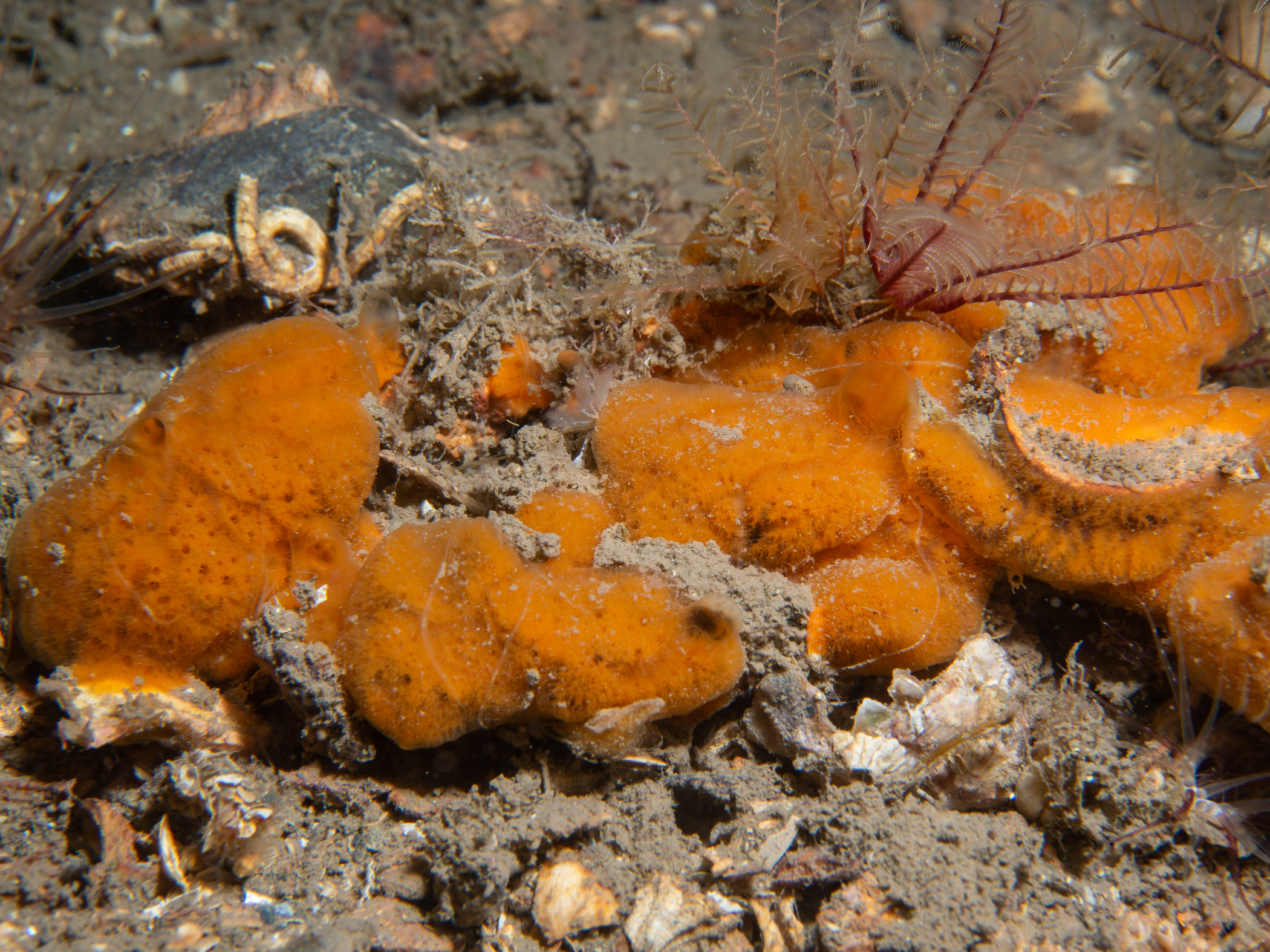
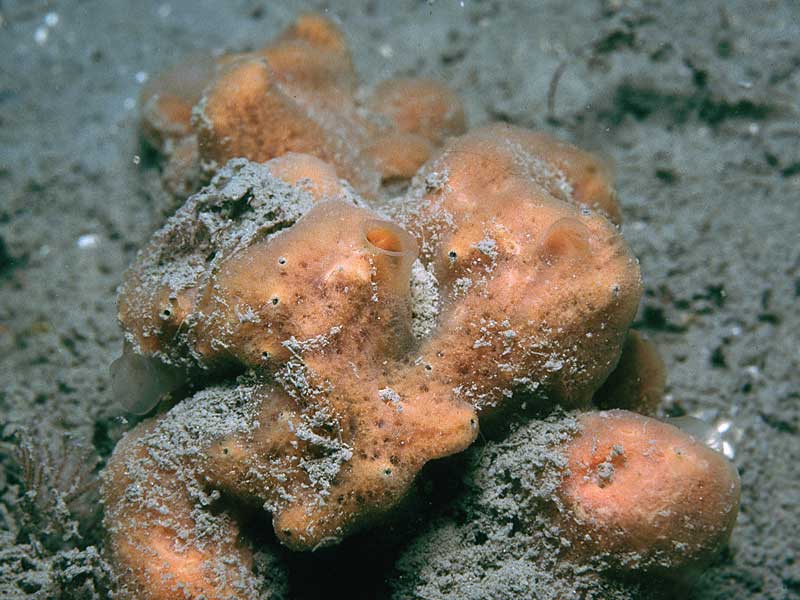
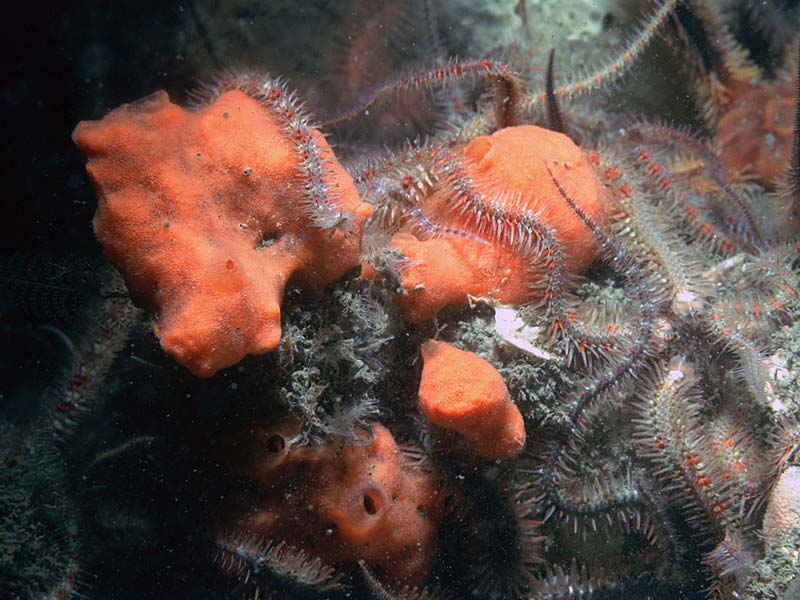
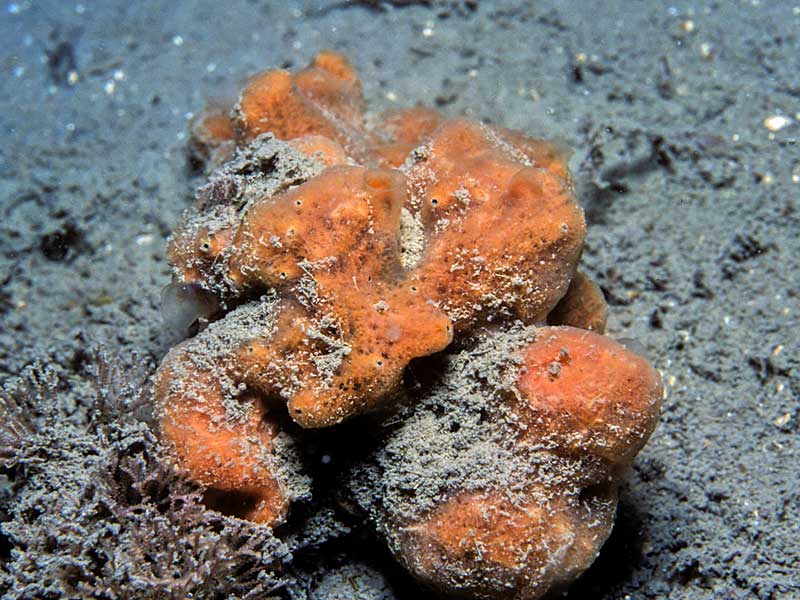
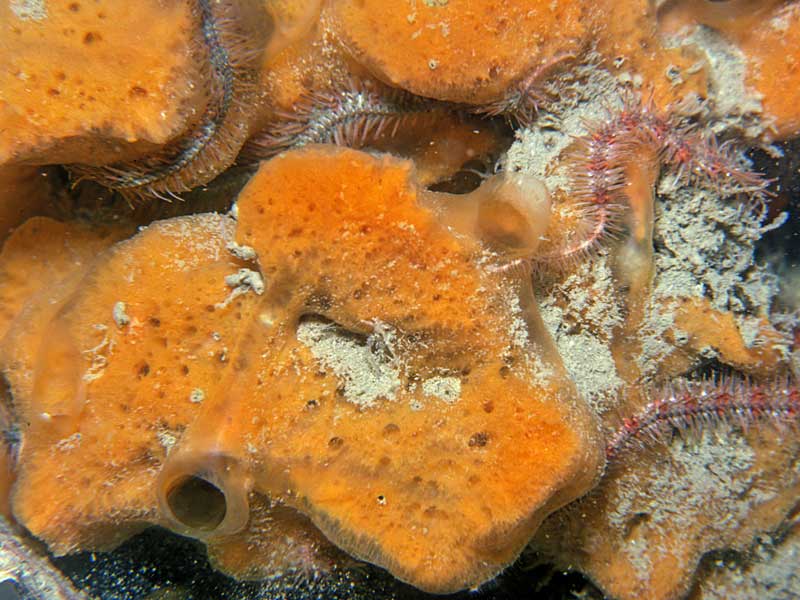
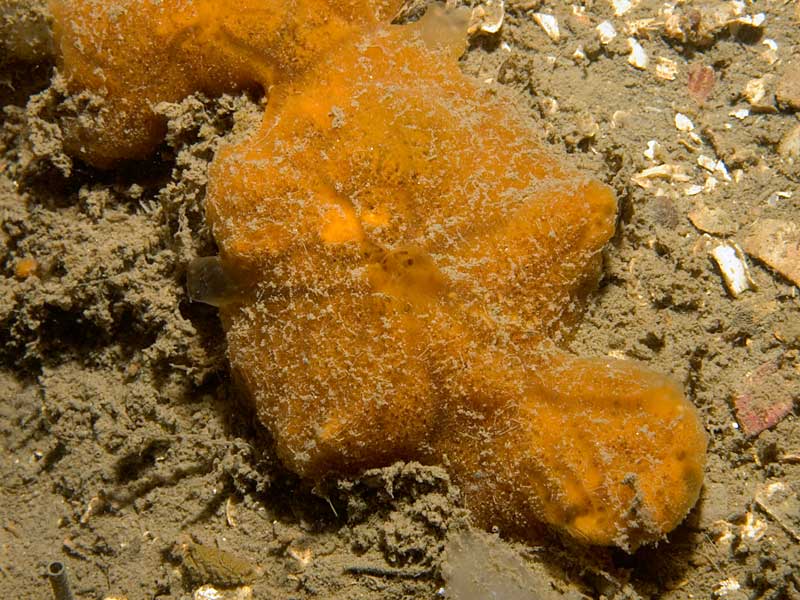
Form: Thin sheet, cushion or massive-lobose, very irregular in shape.
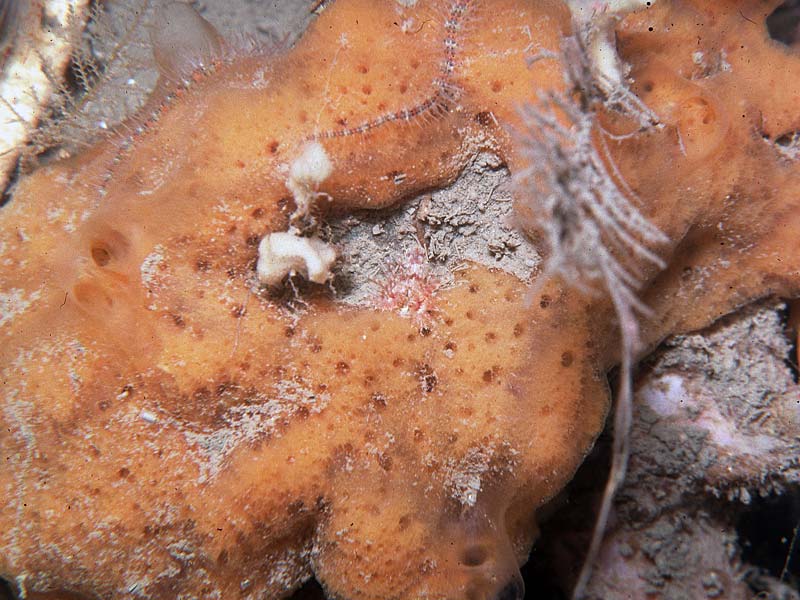
Colour: Typically orange-red, also "brown, yellow, white (the latter as small patches underneath Lithothamnia)". Colour is due to certain substances found in the spherule cells, seen in the matrix in a transverse section.
Smell: None.
Consistency: Fairly soft but tough.
Surface: Transparent with darker pore areas. "Even, conulose." The ectosomal membrane is without spicules and supported, but rarely pierced, by ascending spicular brushes, causing the conulate appearance.
Apertures:
- A few large oscules at the tops of the lobes. These are "scattered and fistular" in cushion forms. Converging excurrent channels are visible as darker streaks. Pores 'sprinkled' across the surface give it a punctate appearance.
Contraction:
- Slight.
 |
 |
 |
 |
 |
 |
| [ More images ] |
Synonyms: Rhaphiodesma sordida Bowerbank, 1874:230,354,Esperella sordida (Bwk., 1874) Topsent, 1890:201, Hymeniacidon subclavata Bowerbank, 1866:209.
Internal characters
 |
Skeleton: Plumoreticulate, of ascending multispicular fibres of subtylostyles, reinforced with variable amounts of spongin. There is no specialized ectosomal skeleton. In juvenile specimens the fibres are well spaced and independent but, as the sponge matures, the fibres branch and anastomose, and the plumosely arranged network becomes apparent.
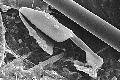
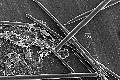
Spicules: The megascleres are long, straight-shafted subtylostyles (a) with barely formed elliptical heads, mostly 255-(275)-290 μm. Microscleres include palmate anisochelae (b) of 3 sizes (ca. 40 μm, 20 μm and 12 μm), the largest grouped into rosettes of 12-20 spicules in the ectosome. Sigmata (c) of two sizes, the largest (ca. 65 μm) are always present and numerous, whereas the smaller (ca. 37 μm, of variable thickness) can be rare. Toxa (d) (ca.200 μm) are very long and fine with a very abbreviated central flexion in proportion to the overall length, and with the ends gently recurved; these may be very rare. Trichodragmata (e) (ca. 27-32 μm), of characteristic 'spindle-shape', are very small and can be overlooked.
 |  |
Habitat: "ELWS to 30m, growing on a wide variety of Mollusca, including Ostrea, Pecten and Chlamys; on Lithophyllum, Fucus, Sertularia, stones and rocks." In Strangford Lough this species occurs on clumps of Modiolus modiolus (horse mussels) and Chlamys varia in an area of moderate current (max. 1 knot).
Distribution: "British Isles; France; Mediterranean." Known recently from Strangford Lough and the Sound of Jura.
Identity: The spicule complement, especially the large toxa and characteristic trichodragmata, is quite distinctive. Until more is known about the live appearance of other Poecilosclerida it is difficult to say how characteristic the external appearance is. Mycalid species most readily confused with this species are Mycale contarenii and Mycale macilenta (q.v.), but colour, shape and size of toxa and presence or absence of trichodragmata can help in distinguishing them. In life, confusion with Mycale rotalis is more likely.
Distribution Map from NBN: Mycale subclavata at National Biodiversity Network mapping facility, data for UK.
iNaturalist: Mycale subclavata at iNaturalist World Species Observations database.
WoRMS: Mycale subclavata at World Register of Marine Species. Accepted name: Mycale (Carmia) subclavata (Bowerbank, 1866). AphiaID: 168605.
Classification: Biota; Animalia; Porifera; Demospongiae; Heteroscleromorpha; Poecilosclerida; Mycalidae; Mycale
Voucher: BELUM : Mc437. Strangford Lough, Down.
Editors: D. Moss, B.E. Picton.
| Previous species | Next species |
| Picton, B.E. & Morrow, C.C. (2023). Mycale subclavata. (Bowerbank, 1866). [In] Sponges of Britain and Ireland. https://www2.habitas.org.uk/marbiop-ni/sponges.php?item=C5540. Accessed on 2026-10-16 |