
| PORIFERA : Clionaida : Clionaidae | SPONGES |
Cliona celata Grant, 1826
 |
| Cliona celata |
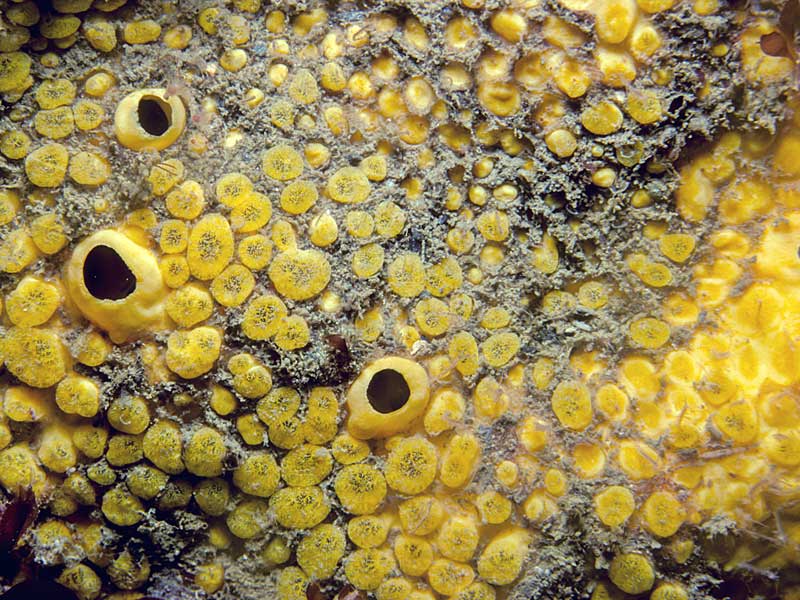
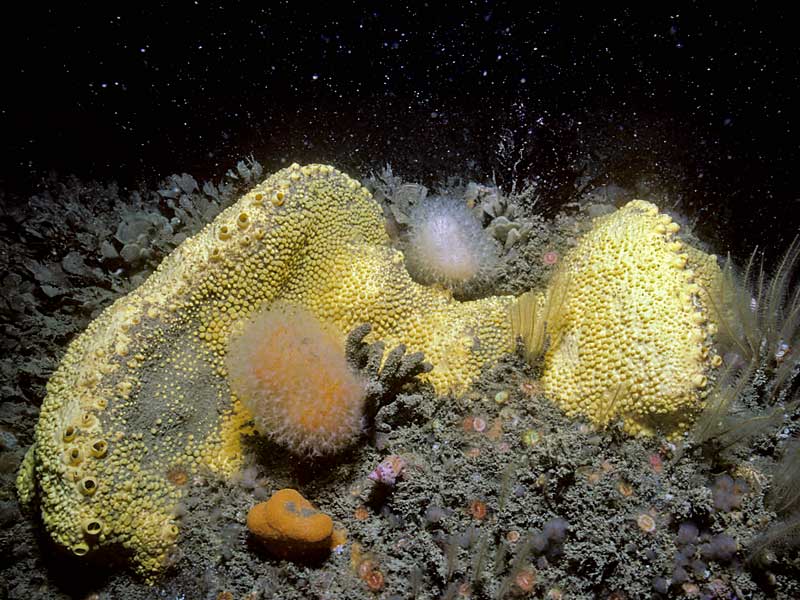
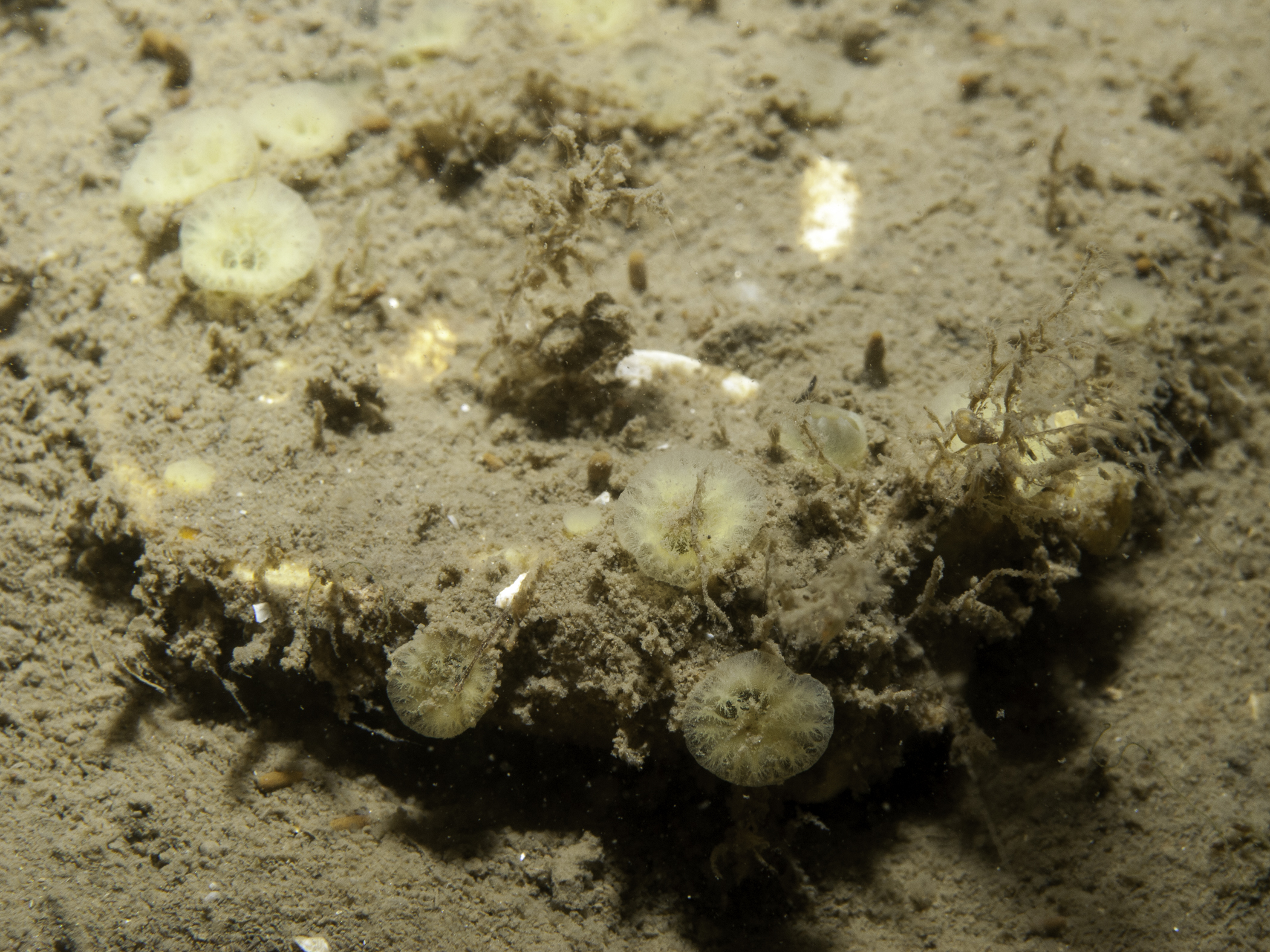
Form: One of the few boring species which produces a massive or 'raphyrus' stage (the only British species?). In the raphyrus stage the sponge becomes massive-lobose with rounded ridges up to 40cm across. It often forms a thick plate-like structure standing on its edge and up to 100 cm long. In the boring stage it is seen as clear sulphur-lemon lobes, which are the rounded tips of papillae, and are found studding limestone rock, shells, etc.
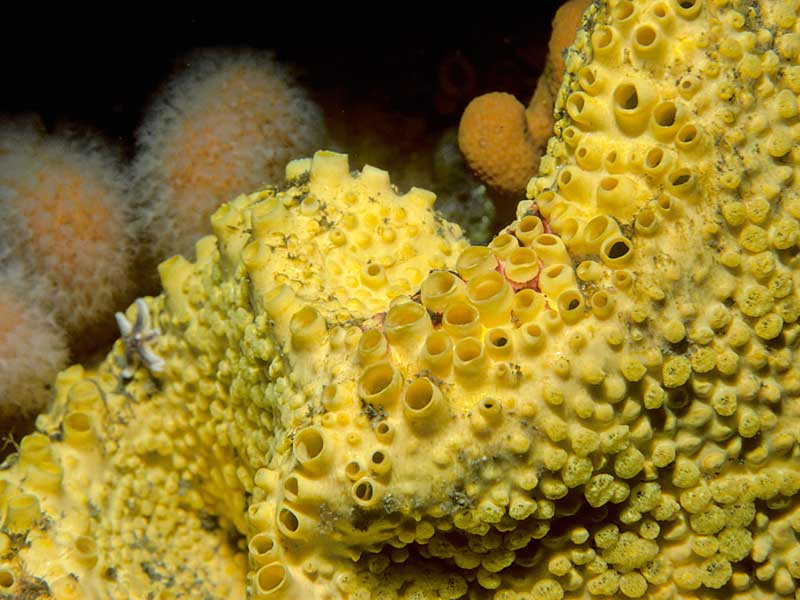
Colour: Raphyrus form: yellow, becomes darker out of water, and in alcohol goes brown discolouring both the alcohol and the specimen labels. Sometimes observed with red discolouration surrounding oscular openings (symbiotic algae?)
Smell: None.
Consistency: Firm with tough outer layer. "Compact."
Surface: The massive form is evenly covered by rather tuberculate retractable inhalent papillae. The surface between these papillae is more or less smooth.
Apertures:
- In the massive form large oscules with raised rims are found along the tops of ridges. Delicate, thin walled, retractable inhalent papillae, which project up to 1cm above the surface when extended, cover the remainder of the surface. These are not noticeable when out of the water as they close and retract below the surface. In the boring stage apertures are at the tips of the papillae.
Contraction:
- The whole sponge shows a noticeable decrease in size when removed from the water. The papillae, and to a lesser extent the oscules, contract to such an extent that they become almost invisible out of the water.
 |
 |
 |
| [ More images ] |
Synonyms: Vioa celata (Grant, 1826:78) Schmidt, 1866:20), Raphyrus griffithsii Bowerbank 1866:354.
Internal characters
 |
Skeleton: Confused, showing no differentiation into ectosomal and internal skeletons.
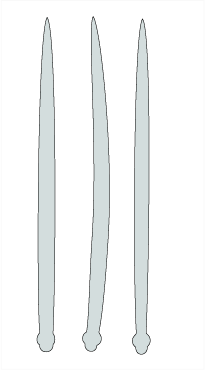
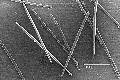
Spicules: Megascleres are tylostyles 280-(350)-430 μm densely and irregularly arranged. The heads have swellings just up from the tip in most spicules. Microscleres, are apparently normally absent; if present (this may indicate a related species), they are modified microrhabds (spiraster or amphiaster types derived from sanidasters).
 |
Habitat: On rock. Begins life by boring into limestone, shells or calcareous red algae. Can withstand sediment.
Distribution: Widely distributed. "Eastern Atlantic from Sweden to Gibraltar and Mediterranean." The massive form is very common in parts of SW Britain, sometimes dominating the underwater 'scenery'. This form apparently reaches its easterly limit around Dorset in the Channel; apparently not found on North Sea coasts of British Isles?
Identity: By sight alone if massive form, the colour and inhalent sieve-like openings are distinctive. The boring form can be identified to genus only, but cannot be confused with any other genus except for Thoosa and Alectona, occasionally found in British waters.
Distribution Map from NBN: Cliona celata at National Biodiversity Network mapping facility, data for UK.
iNaturalist: Cliona celata at iNaturalist World Species Observations database.
WoRMS: Cliona celata at World Register of Marine Species. Accepted name: Cliona celata Grant, 1826. AphiaID: 134121.
Classification: Biota; Animalia; Porifera; Demospongiae; Heteroscleromorpha; Clionaida; Clionaidae; Cliona
Voucher: BELUM : Mc174. Strangford Lough, Down.
Editors: J.D. Guiterman, D. Moss, B.E. Picton.
| Previous species | Next species |
| Picton, B.E. & Morrow, C.C. (2023). Cliona celata. Grant, 1826. [In] Sponges of Britain and Ireland. https://www2.habitas.org.uk/marbiop-ni/sponges.php?item=C3020. Accessed on 2026-10-15 |