
| MOLLUSCA : Pectinida : Pectinidae | SNAILS, SLUGS, ETC. |
Aequipecten opercularis (Linnaeus, 1758)
 |
| Aequipecten opercularis |
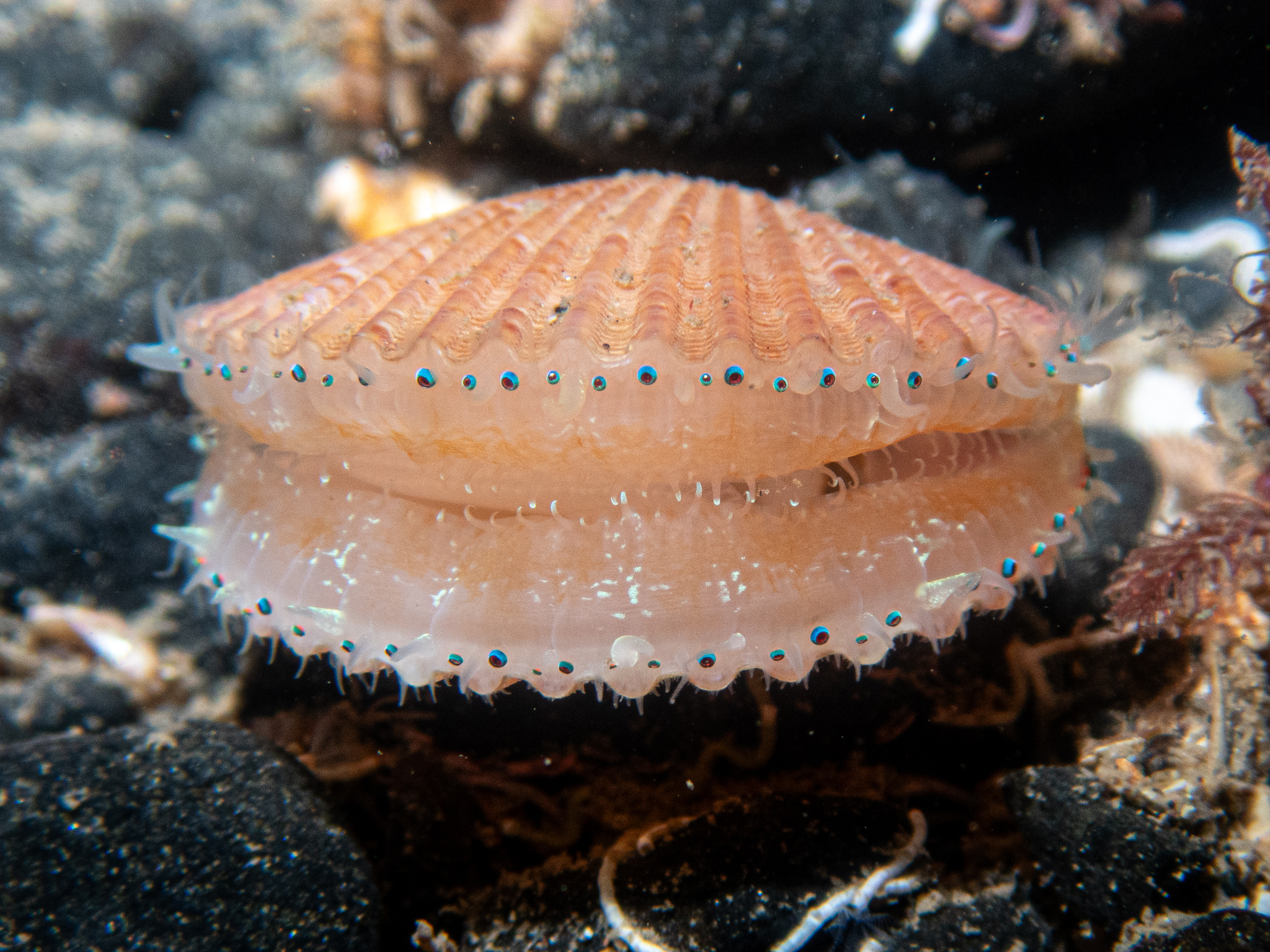
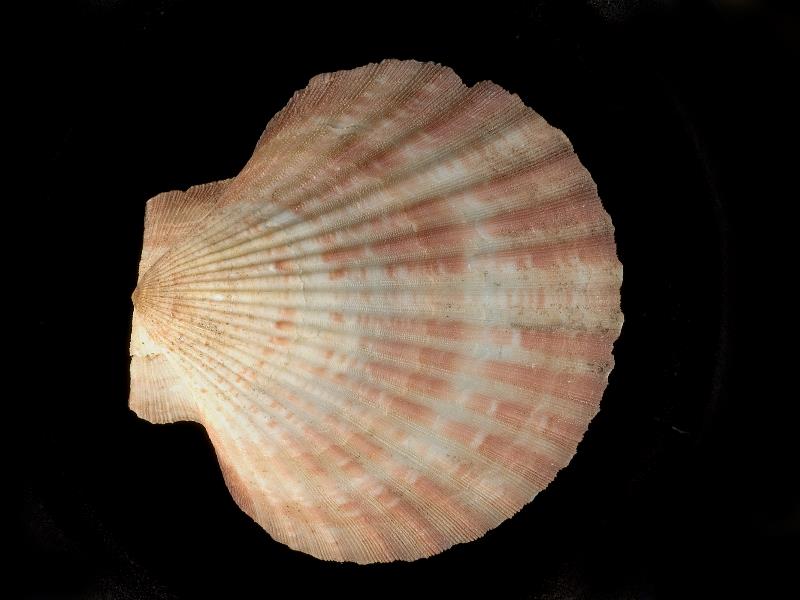
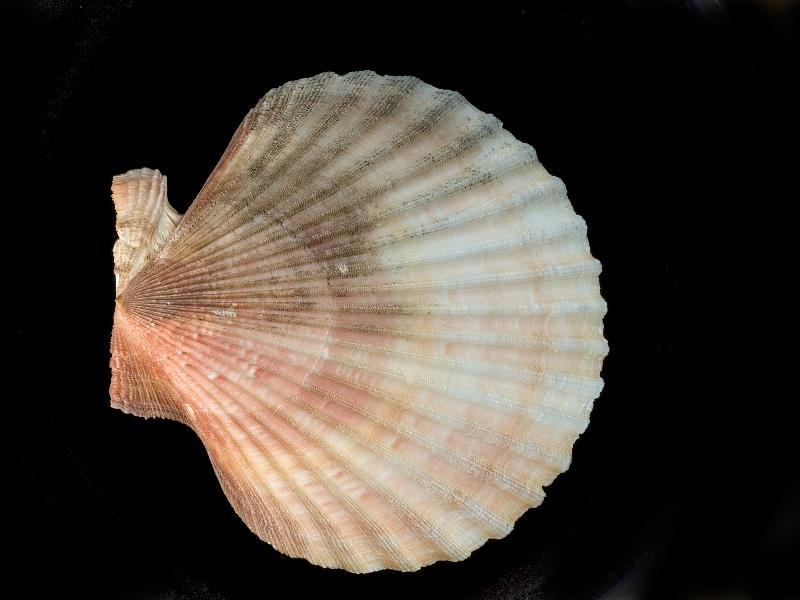
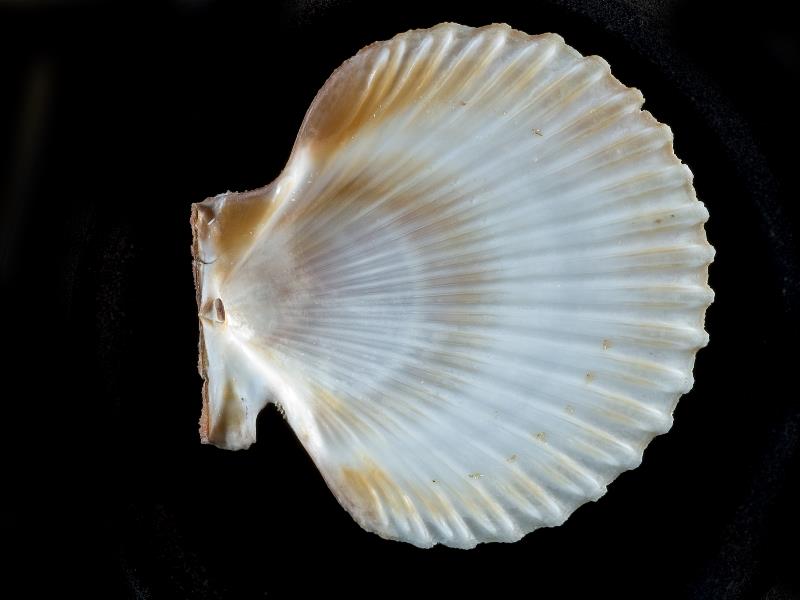
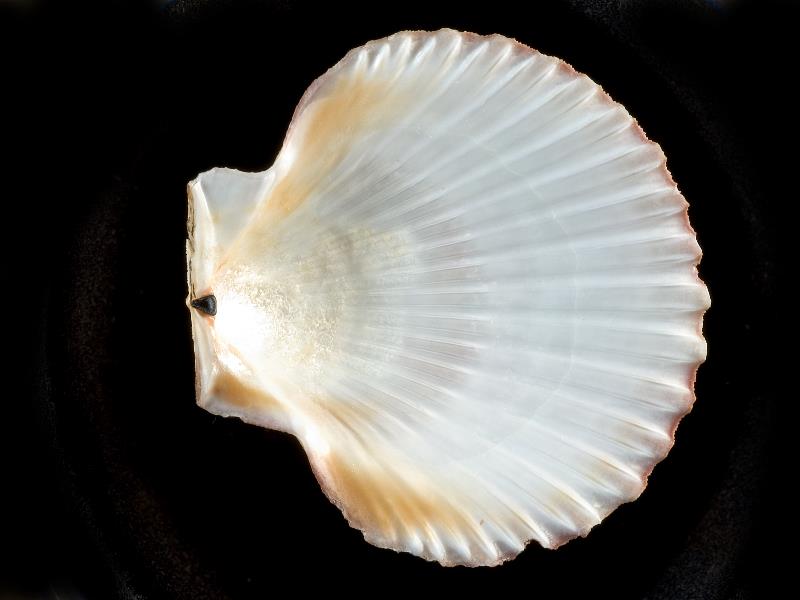
Description: This scallop comes in a variety of colours and can be light pink, brown, orange or yellow, and can often have either darker or lighter banding, zigzags or rays. It can grow up to 9 cm and has two convex shells, with the left slightly more convex then the right There are about 20 well defined ridges on each shell. The 'ears' are almost equal in size. In life it has distinctive bright blue eyes.
Habitat: Sand or fine gravel, occasionally found on lower shore, but more common subtidally to depths of up to 100 m.
Ecology: When very young they are usually attached by byssus, with older individuals free living. Very active swimmer. Can sometimes be completely covered by sponge.
Distribution: Found all around Britain and Ireland.
Similar Species: Could potentially confused with some other scallops, but these are normally attached to rock by one shell, and Aequipecten opercularis has almost equal sized 'ears' while other species are distinctly unequal.
Key Identification Features:
- Medium-sized scallop up to 9 cm in size.
- 20 well-defined ridges on each shell.
- 'Ears" almost equal in size.
- Bright blue eyes.
Distribution Map from NBN: Aequipecten opercularis at National Biodiversity Network mapping facility, data for UK.
iNaturalist: Aequipecten opercularis at iNaturalist World Species Observations database.
GBIF data for Aequipecten opercularis
WoRMS: Aequipecten opercularis at World Register of Marine Species. Accepted name: Aequipecten opercularis (Linnaeus, 1758). AphiaID: 140687.
Classification: Biota; Animalia; Mollusca; Bivalvia; Autobranchia; Pteriomorphia; Pectinida; Pectinoidea; Pectinidae; Pectininae; Aequipectinini; Aequipecten
| Previous species | Next species |
| Picton, B.E., Keatley, L. & Morrow, C.C. (2025). Aequipecten opercularis. (Linnaeus, 1758). [In] Encyclopedia of Marine Life of Britain and Ireland. https://www2.habitas.org.uk/marbiop-ni/speciesaccounts.php?item=W18050. Accessed on 2026-07-17 |