
Northern Ireland Priority species (NIPS)
| MAMMALIA : Carnivora : Phocidae | MAMMALS |
Phoca vitulina Linnaeus, 1758
Harbour seal
 |
| Phoca vitulina |
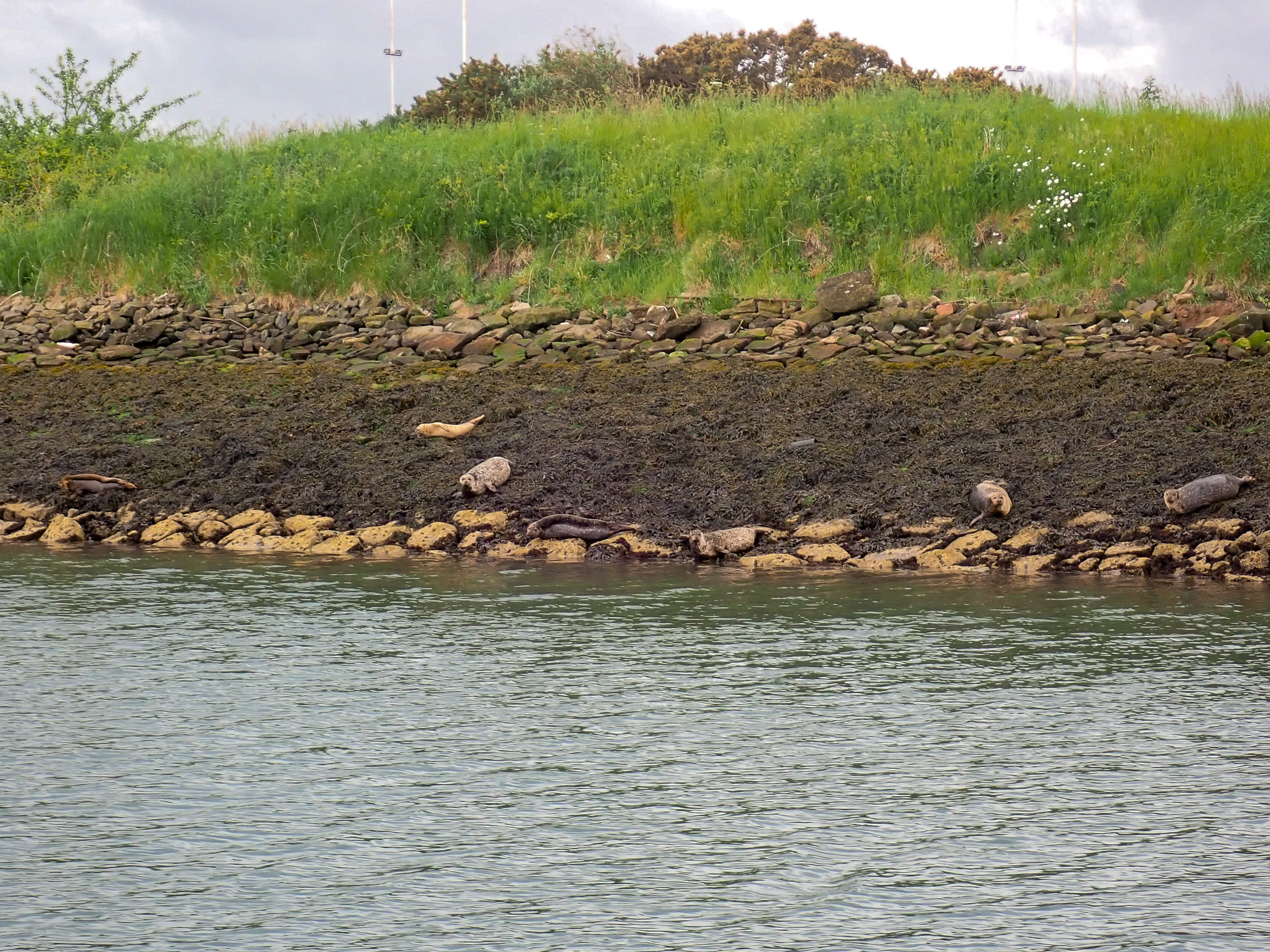
The common seal, or harbour seal as it is also known, is found all around the coastline of Northern Ireland and is seen regularly hauled out on rocky shores and sandbanks. In 1988 the European common seal population was decimated by a viral disease, phocine distemper virus (PDV) – it is estimated that around 18,000 seals died, about 50% of the total population. Eventually the population recovered and numbers increased but an outbreak of the disease in 2002-2003 killed a further 22,500 seals. In Northern Ireland around 350 seals died during the two disease outbreaks. There have not been any outbreaks for last two decades and this is not currently considered a major issue for the seal populations here however mouth rot has been causing severe issues in Britain and needs to be monitored.
In brief
- Found all around the coast of Northern Ireland – Strangford Lough, County Down holds the largest breeding colony in Ireland.
- Prefers to haul out in sheltered inshore bays and estuaries - habitat varies from rocky shores to mudflats and sandbars usually close to deep water and good feeding areas.
- Mostly seen from July to September at haul out sites.
- Declining and scarce with Northern Ireland being the Irish stronghold.
- Main threats to the population are disease and pollution.
Species description: The common seal has a streamlined body covered with a thick layer of fat (blubber) under the skin which helps keep the animal warm. The fur is brownish-grey with small dark spots giving the coat a mottled appearance. The limbs have been modified into flippers for swimming. The head is rounded with a short muzzle and large eyes. Males can grow up to 1.8 m in length; females are smaller, up to 1.5 m. When hauled out on the shore common seals often lie in a head up, tail up position.
Life cycle: Female seals can breed when they are 3 to 4 years old; males become sexually mature a little later at 5 to 6 years old. Mating takes place in late summer and a single pup is born the following year in June or July. The pup is well developed and can swim and dive within a few hours of birth. The pup is fed on very rich milk (45% fat) and grows quickly; it is weaned after about four weeks and must then learn how to fend for itself. Common seals eat a wide variety of different fish such as plaice, flounder, herring, mackerel, whiting, etc and may swim long distances (up to 50 km) from their haul out sites to find food. Much of their time is spent alone in the sea, feeding, and they are only found in groups at haul out sites (places where they rest, mate, give birth and moult). Seals moult their fur coats once a year in July/August when the breeding season is over. The moult normally lasts around 3-4 weeks and the seals spend most of this time ashore. Seals can live for up to 30 years; females usually live longer than males.
Similar species: The common seal and the grey seal are both found around the N. Ireland coast. The common seal is the smaller of the two species and has a more rounded head with a short muzzle. The nostrils of the common seal meet together and form a V shape while those of the grey seal are nearly parallel and do not meet. Grey seal pups are born with white fur and do not usually swim until they shed this coat at 3 to 4 weeks. Common seal pups are grey/brown at birth and can swim within an hour of being born.
How to see this species: Common seals can be seen all around the coast of Northern Ireland, but most are found on the County Down coastline – Strangford Lough holds the largest population in Ireland. The best time to see seals is in July and August when they spend a lot of time hauled out on the shore.
Current status: Declining and scarce with Northern Ireland being the Irish stronghold.
The UK holds around 45% of the world population of the European sub-speciesThe common seal is widely distributed in the Northern Hemisphere and there are at least four subspecies. Only the eastern Atlantic subspecies is found in European waters. The UK holds 50% of the European population, around 50,000 animals.
An aerial survey carried out in 2002 found 1248 common seals around the coastline of Northern Ireland – only animals on land at the time of the survey were counted. Strangford Lough, County Down holds the largest colony and is the most important breeding site for the common seal in Ireland.
Why is this species a priority in Northern Ireland?
- Criterion 4: NI stronghold or endemic – both stronghold range/population and designation as ‘endemic’ subject to expert judgement.
Threats:
- Chemical pollution – in particular organochlorines that may interfere with seal reproduction.
- Oil pollution.
- Disease – phocine distemper virus (although currently there are no active outbreaks) and mouth rot.
- Low risk of infection with Avian Influenza.
- Disturbance - hauled out seals need time to rest and can be easily disturbed by both intentional and unintentional approaches. Approaches can lead to panic and stress, and even the abandonment of pups in severe cases.
Action: Records of new sites for this species, with details of habitat and population are always valuable. Observations with a photograph can be recorded using iNaturalist, find the MBDP-NI iNaturalist project here.
Alternatively, records can be sent to CEDaR, National Museums Northern Ireland, 153 Bangor Road, Cultra, Holywood, County Down, BT18 0EU. Tel 028 9039 5257, e-mail cedar.records@nationalmuseumsni.org, or via the online portal.
Objectives:
- Maintain the number of viable populations of the common seal.
- Maintain the range of the common seal.
- Provide specific protection, where appropriate, for the breeding and hauling out sites of the common seal from undue disturbance or changes resulting, directly or indirectly, from human activities.
Conservation:
- Protected by the Wildlife (Northern Ireland) Order 1985 Section 5.
- Protected under the Wildlife and Natural Environment (WANE) Act (Northern Ireland) 2011.
- Listed under Annex II and V of the EU Habitats directive.
- Protected under Bern Convention (Convention on the Conservation of European Wildlife and Natural Habitats) Appendix III.
Distribution Map from NBN: Phoca vitulina at National Biodiversity Network mapping facility, data for UK.
iNaturalist: Phoca vitulina at iNaturalist World Species Observations database.
WoRMS: Phoca vitulina at World Register of Marine Species. Accepted name: Phoca vitulina Linnaeus, 1758. AphiaID: 137084.
Classification: Biota; Animalia; Chordata; Vertebrata; Gnathostomata; Tetrapoda; Mammalia; Theria; Carnivora; Caniformia; Pinnipedia; Phocidae; Phoca
| Previous species | Next species |
| Adapted from text by Angela Ross (2026). Phoca vitulina. Linnaeus, 1758. [In] Priority species, Marine Biodiversity Portal NI. https://www2.habitas.org.uk/marbiop-ni/priorityaccounts.php?item=ZK200. Accessed on 2026-09-13 |