
| PORIFERA : Poecilosclerida : Microcionidae | SPONGES |
Microciona strepsitoxa Hope, 1889
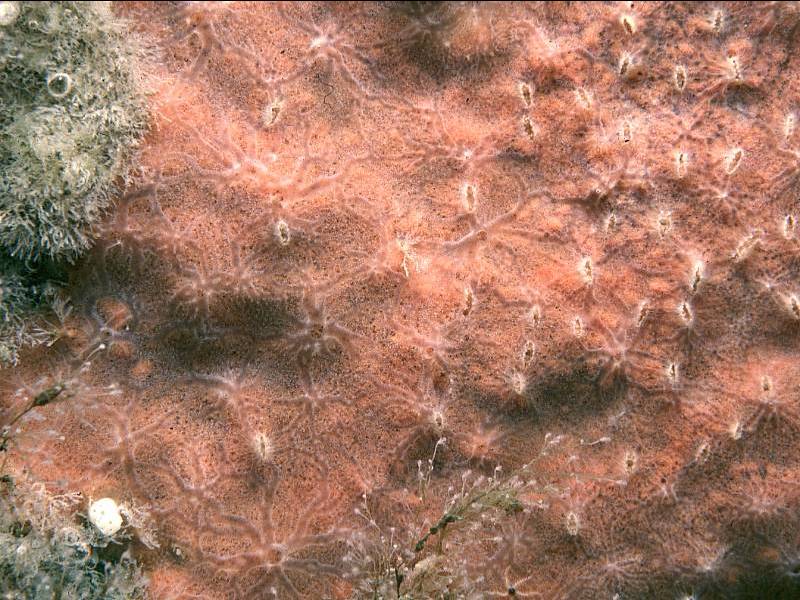 |
| Microciona strepsitoxa |
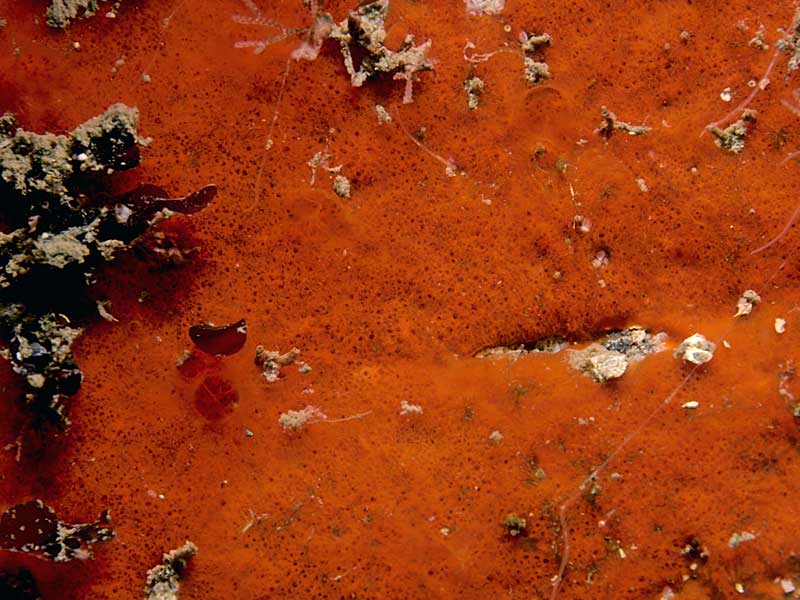
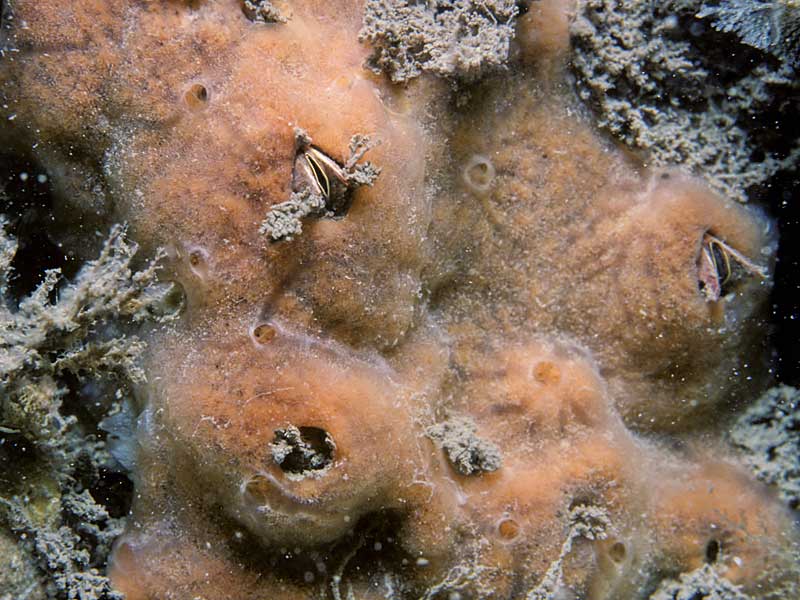
Form: Thin crust, to 20+cm2
Colour: Red, orange-red.
Smell: None.
Consistency: Hard to determine; "comes away in scraps".
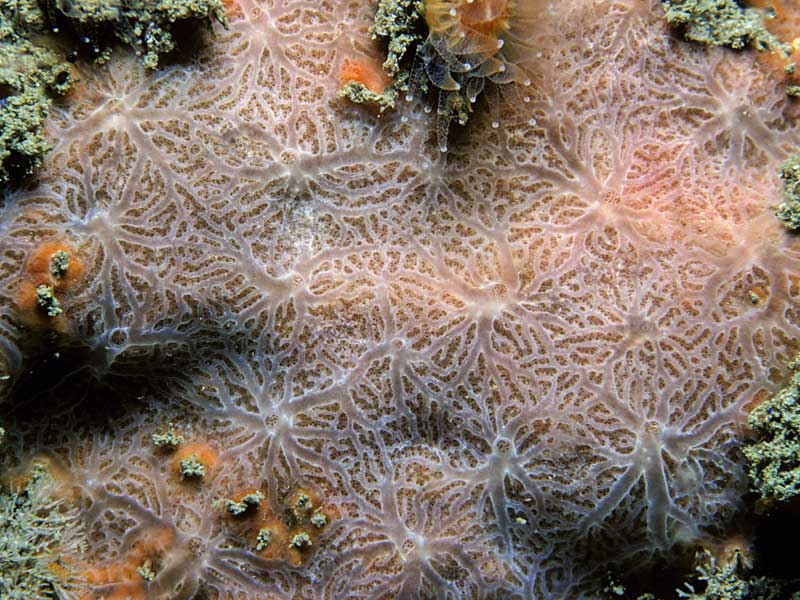
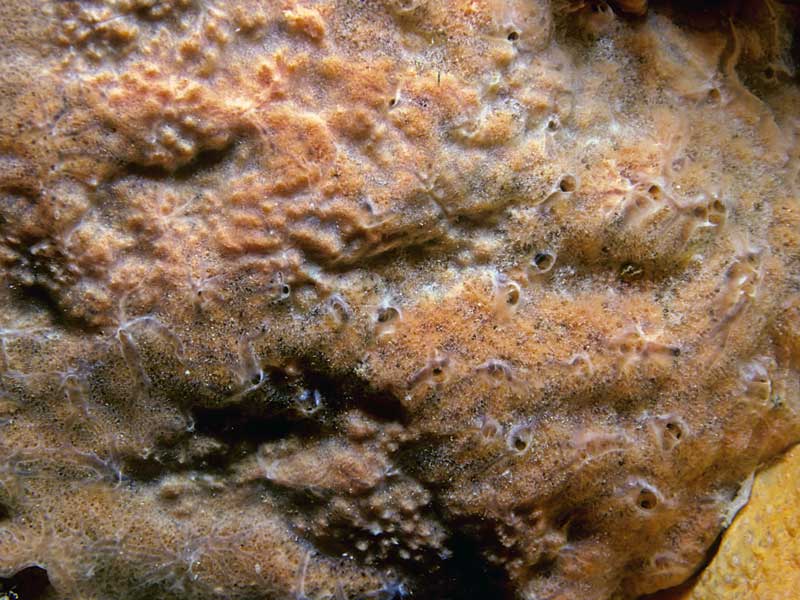
Surface: Conforms closely to underlying substrate. Excurrent channels often clearly visible.
Apertures:
- Oscules large, distinct, with slightly raised rims, at centre of system of conspicuous, convergent, sub-surface channels.
Contraction:
- Hard to determine. Fragments tend to curl up in alcohol (which becomes orangeish).
 |
 |
 |
 |
[ More images ] |
Internal characters
 |
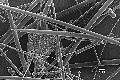
Skeleton: Typically microcionid, see M. atrasanguinea and skeletal diagram for Microciona armata on page 36. According to Levi (1960, p.67) there is some tendency for the longer principal megascleres in the plumose columns to be found towards the surface.
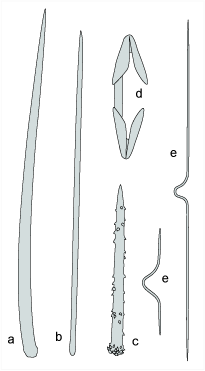
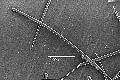
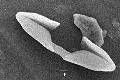
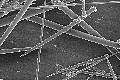
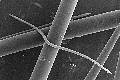
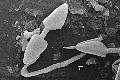
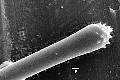
Spicules: Principal megascleres are acanthostyles (a), perhaps slightly curved, with spines at the head only (these spines may be almost invisible); size 350-700 x 5-7 μm. Echinating acanthostyles (c), are straight to slightly curved, and covered with spines; 70-200 x 4-6 μm. Auxiliary subtylostyles (b), 150-500 x ca. 2-5 μm, may have rugose or very lightly spined heads. Microscleres are palmate isochelae (d), 12-20 μm (in Mediterranean, 11-15 μm according to Levi, 1960) and toxa of two types (e): ca. 40-140 μm with large central flexion and ca. 200-460 μm with a very small, somewhat twisted, central flexion.
 |  |  |  |
 |  |  |
Habitat: Vertical rock surfaces in regions of considerable water movement. Also Aequipecten valves, stones, etc. Littoral, infra- and circalittoral.
Distribution: Channel, Atlantic, Mediterranean. Known recently from Anglesey, Calf of Man, SW and NE Ireland, Azores.
Identity: Difficult, if not impossible, to separate visually from various other "red crusts". The conspicuous star-like arrangement of channels converging to the oscules (best seen in close-up photographs) may give a clue. Microscopically the presence of large toxa with a small twisted, central flexion is distinctive, though some other Microciona species share this feature. Occasionally in aberrant specimens the isochelae may be scarce.
Distribution Map from NBN: Microciona strepsitoxa at National Biodiversity Network mapping facility, data for UK.
iNaturalist: Microciona strepsitoxa at iNaturalist World Species Observations database.
WoRMS: Microciona strepsitoxa at World Register of Marine Species. Accepted name: Clathria (Microciona) strepsitoxa (Hope, 1889). AphiaID: 167689.
Classification: Biota; Animalia; Porifera; Demospongiae; Heteroscleromorpha; Poecilosclerida; Microcionidae; Microcioninae; Microciona
Voucher: BELUM : Mc1743. Calf, Isle of Man.
Editors: D. Moss, B.E. Picton.
| Previous species | Next species |
| Picton, B.E. & Morrow, C.C. (2023). Microciona strepsitoxa. Hope, 1889. [In] Sponges of Britain and Ireland. https://www2.habitas.org.uk/marbiop-ni/sponges.php?item=C8220. Accessed on 2026-10-15 |