
| PORIFERA : Poecilosclerida : Crellidae | SPONGES |
Crella rosea (Topsent, 1892)
 |
| Crella rosea |
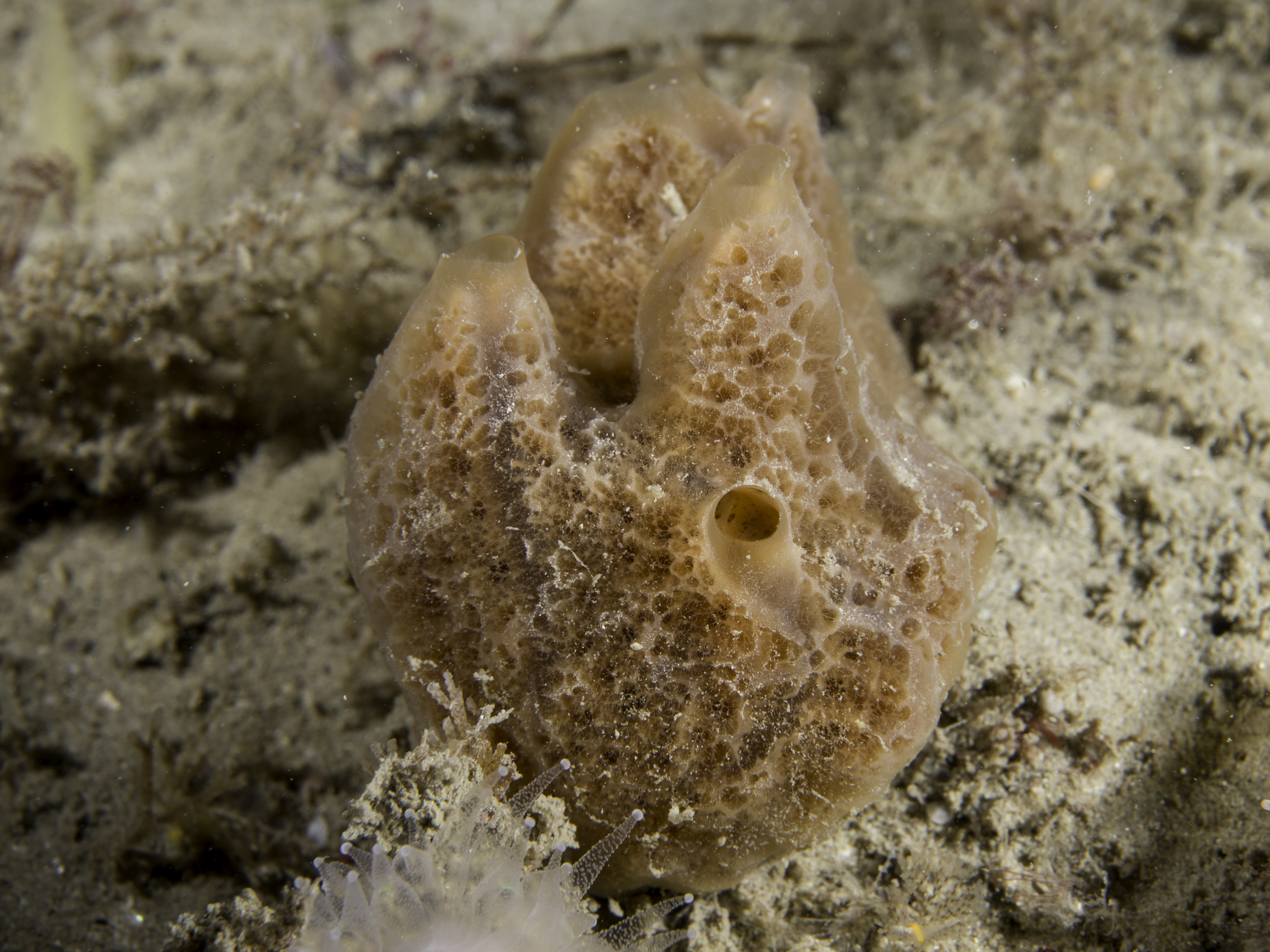
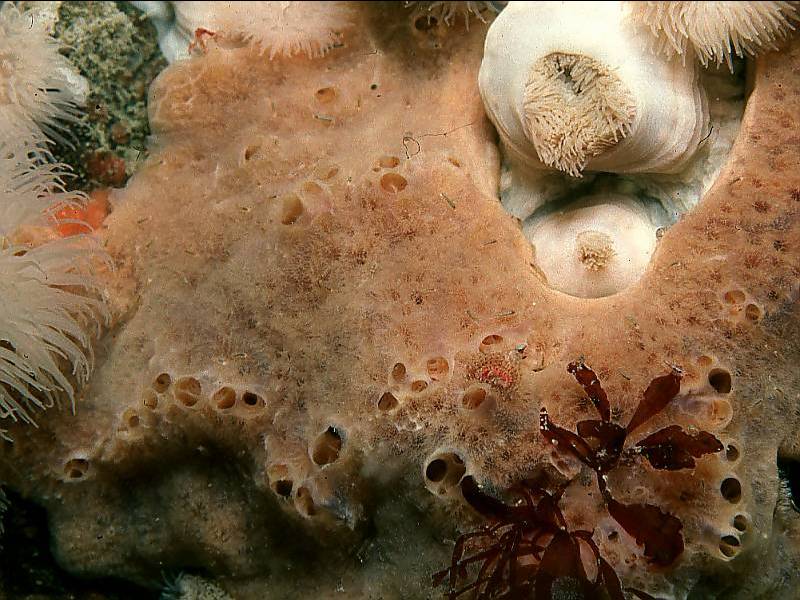
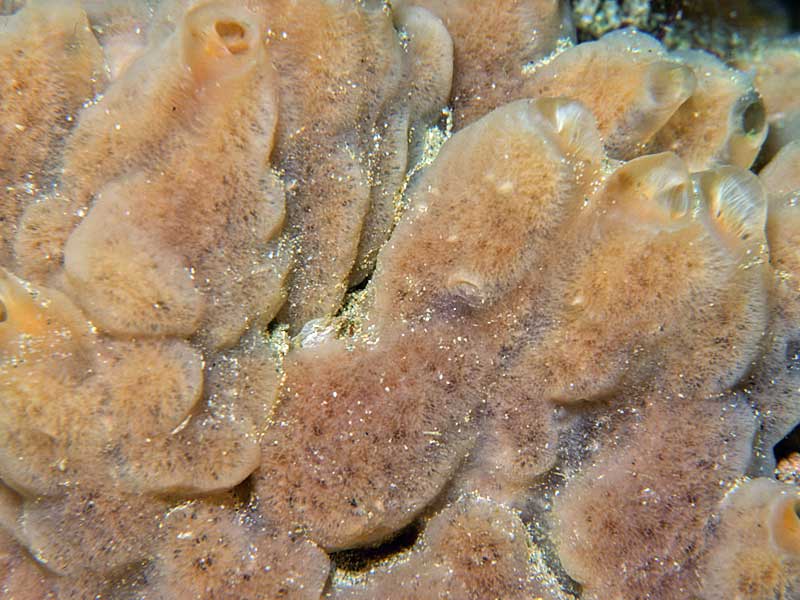
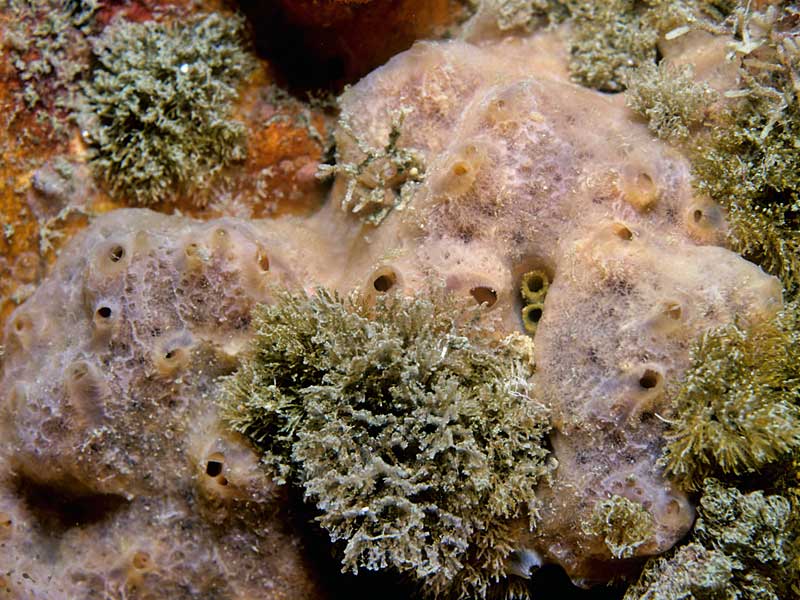
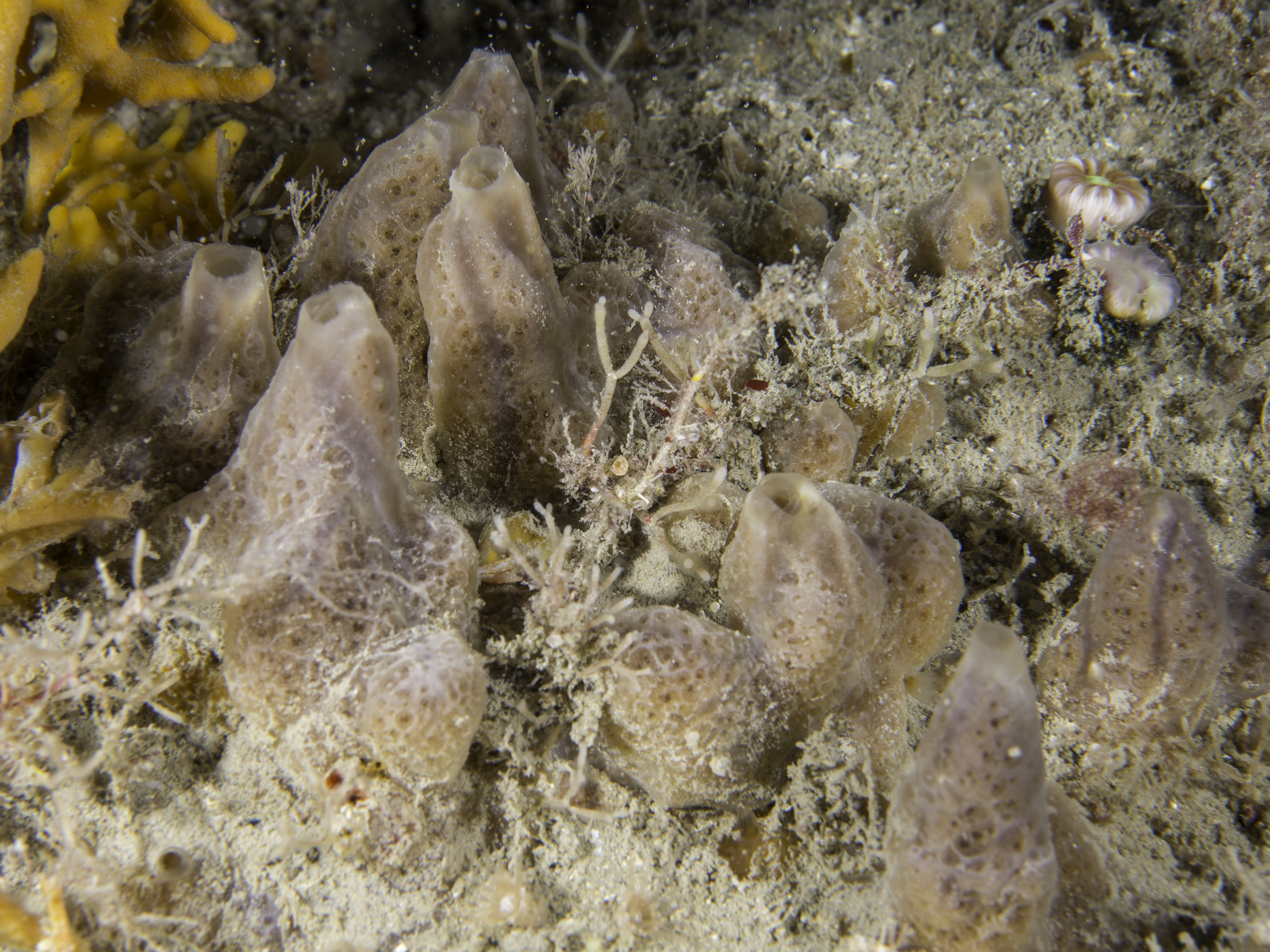
Form: Massive-lobose. A series of lobes joined into an extensive sheet to 30cm or more across and 3cm thick.
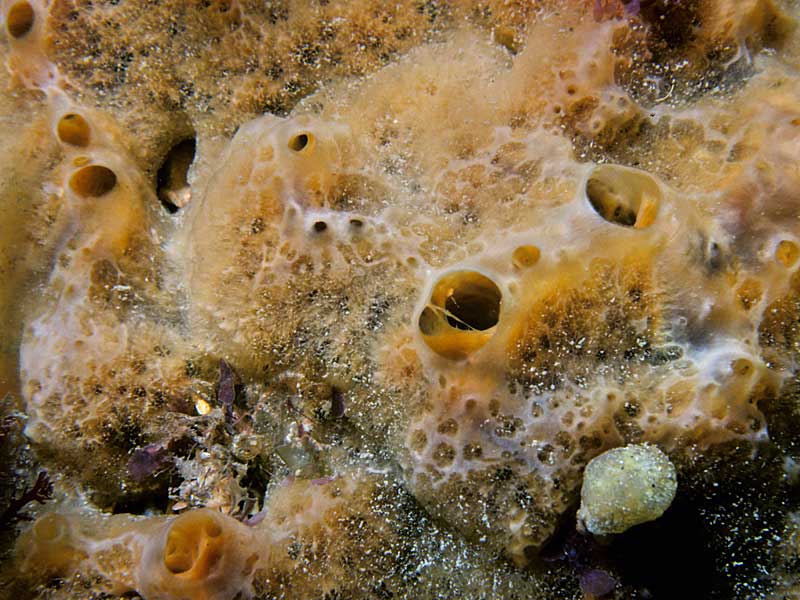
Colour: A rather watery orange grading into a purplish tinge, often brownish - orange or reddish-brown; also yellow. "Rose red."
Smell: None - slight.
Consistency: Fairly soft but quite tough.
Surface: More or less transparent with densely packed inhalant pores gathered into groups. These inhalent areas are quite distinctive as the surface between the pore areas is less transparent.
Apertures:
- Oscules large, allowing a view of the excurrent channels; terminating lobes of the body. One or two dark exhalent canals run down the sides of the oscular lobes. In contracted preserved specimens this appears as a smooth groove.
Contraction:
- Considerable, changing the rounded appearance to a more angular one.
 |
 |
 |
 |
 |
[ More images ] |
Synonyms: Yvesia rosea Topsent, 1892:xxiii, Pytheas rosea (Topsent, 1892:xxiii) Lévi, 1950.
Internal characters
 |
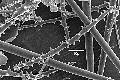
Skeleton: Plumose. The main skeleton is of thick multispicular ascending fibres of strongyloxea. Large straight (endosomal) acanthostyles echinate the substrate, and smaller curved (ectosomal) ones are present throughout the body. The surface skeleton is a dense tangential layer of acanthostyles. Spongin may be present in large amounts, encasing the spicules in the ascending fibres.
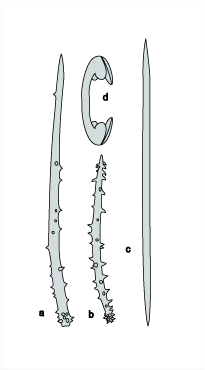
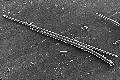
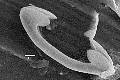
Spicules: Megascleres include strongyloxea (c), 300-(310)-340 μm; ectosomal acanthostyles (b), 88-(110)-130 μm long, entirely covered with very strong conical spines; and endosomal acanthostyles (a), entirely spined, typically 125-220 μm in length. Microscleres are arcuate isochelae, ca. 18 μm, found especially at the surface.
 |  |  |
Habitat: Found on steeply inclined and vertical rock faces in moderately and fully exposed headlands, channels and open coast.
Distribution: "Norway; Roscoff; Mediterranean etc." Known recently from Kellan Head, near Padstow, N. Cornwall; Scilly Isles, Wolf Rock; S. Devon; Skomer Is, S. Wales; Calf, Isle of Man; Blasket Islands, Co Kerry. Apparently a southern and western species in the British Isles.
Identity: Appearance is characteristic, somewhat reminiscent of Myxilla rosacea. Spicules, especially surface acanthostyles, are very distinctive, and are one of the diagnostic features separating the Crellinae from the Phorbasinae. In most Crella species these ectosomal acanthostyles are found only in a dense surface layer, but in this species they are found throughout the body of the sponge.
Distribution Map from NBN: Crella rosea at National Biodiversity Network mapping facility, data for UK.
iNaturalist: Crella rosea at iNaturalist World Species Observations database.
WoRMS: Crella rosea at World Register of Marine Species. Accepted name: Crella (Yvesia) rosea (Topsent, 1892). AphiaID: 169087.
Classification: Biota; Animalia; Porifera; Demospongiae; Heteroscleromorpha; Poecilosclerida; Crellidae; Crella
Voucher: BELUM : Mc48. Portquin. N. Cornwall.
Editors: D. Moss, B.E. Picton.
| Previous species | Next species |
| Picton, B.E. & Morrow, C.C. (2023). Crella rosea. (Topsent, 1892). [In] Sponges of Britain and Ireland. https://www2.habitas.org.uk/marbiop-ni/sponges.php?item=C7480. Accessed on 2026-10-15 |