
| PORIFERA : Poecilosclerida : Hymedesmiidae | SPONGES |
Hymedesmia brondstedi Burton, 1930
 |
| Hymedesmia brondstedi |
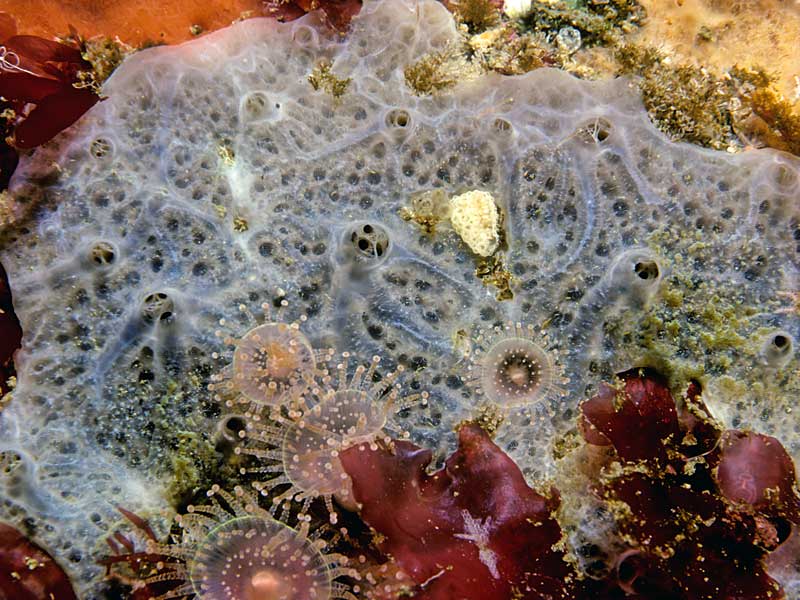
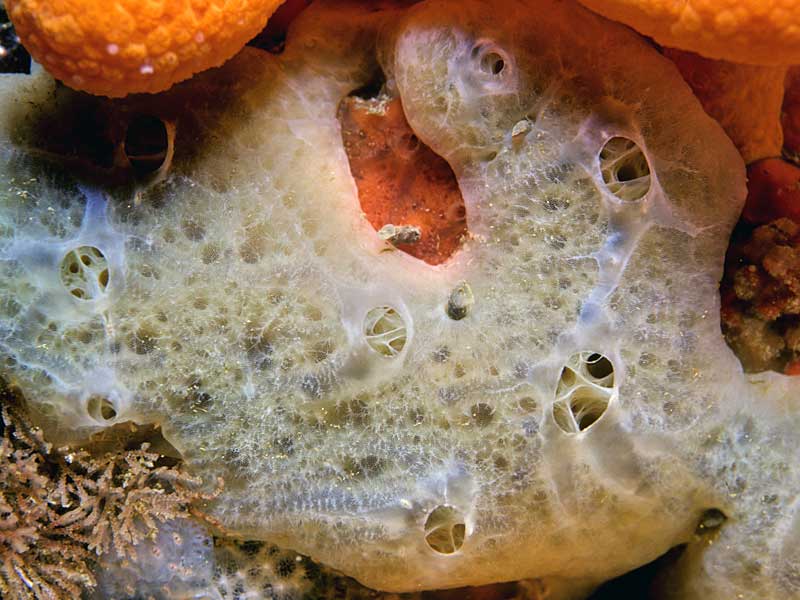
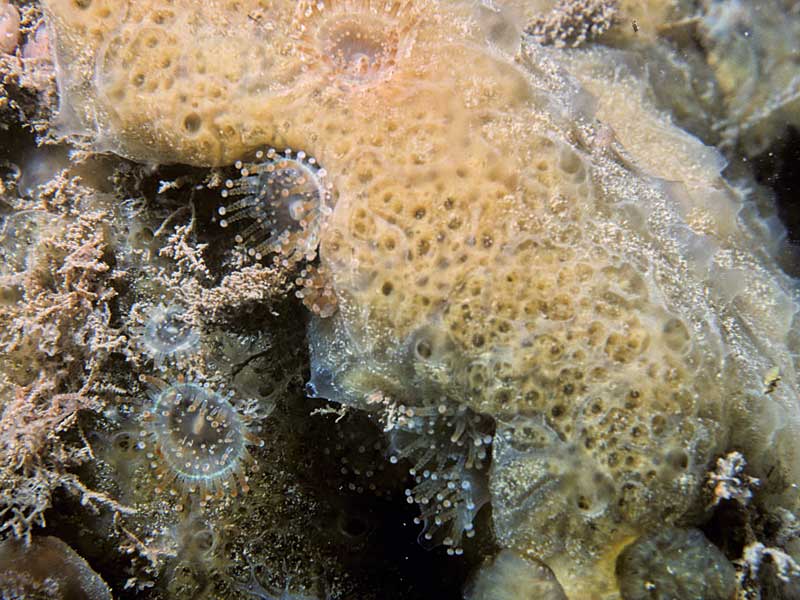
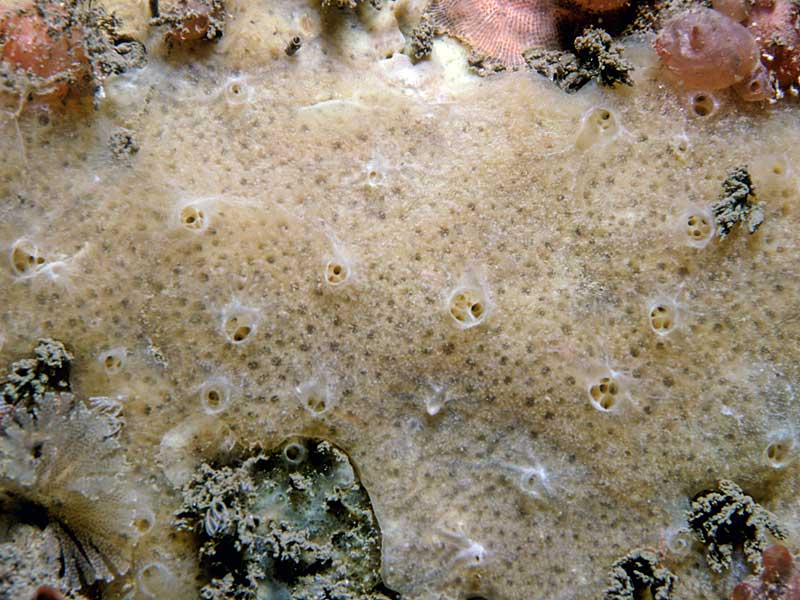
Form: A thin somewhat slimy sheet on rocks or shells. Patches up to 15cm diameter have been seen, 2-3mm thick.
Colour: Usually grey-brown. Also reported to be sometimes pale or deep "yellow, orange-yellow, violet or bright red".
Smell: Consistency : Thin and fragile, difficult to remove as a sheet or to section.
Consistency: Surface : With pores scattered fairly evenly all over. Smooth. Obvious excurrent channels may be present.
Surface: Smell : ?None
Apertures:
- Oscules scattered over surface of sponge, with conical raised edges.
Contraction:
- Some.
 |
 |
 |
| [ More images ] |
Synonyms: Dendoryx dujardini (Bwk., 1866:224) Topsent, 1888:146, Stylopus dujardini (Bwk., 1866) Levinsen, 1887:512, nec Halisarca dujardini Johnston, 1842.
Internal characters
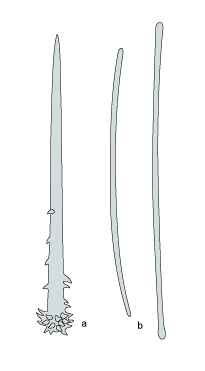 |
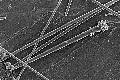
Skeleton: In all Hymedesmia spp. there are acanthostyles with their heads standing on the substrate and their shafts sticking up through the sponge. In this species they are short and may easily be missed. The rest of the skeleton consists of flexuous columns or fibres of many parallel smooth tornotes with tylote ends which fan out at the surface. Skeleton is Hymedesmoid, i.e. permanently encrusting with both principal and secondary endosomal spicules orientated perpendicularly to the substrate.
Spicules: The principal megascleres are acanthostyles (a), entirely spined, but especially thickly on the heads, 110-135 μm. Accessory megascleres are tornotes (b) 180-(190)-200 μm, with strongylote to subtylote ends, sometimes with unequal ends, rarely polytylote. This description, although technically accurate may be misleading in practice as the acanthostyles are often few in number and easily missed. Thus the main body of the sponge usually appears to consist of bundles of tornotes. Microscleres are absent.
 |
Habitat: Very common, e.g. on valves of Aequipecten opercularis and other shells; rock surfaces especially in the kelp zone.
Distribution: "Arctic, Atlantic coast of Europe, Mediterranean" Known recently from E. Scotland, St. Abbs; W. Scotland, Tiree; Strangford Lough; Lough Hyne, Co. Cork; Saltee Is., Co. Wexford.
Identity: The appearance seems to be fairly characteristic, but caution is needed. A Hymedesmoid skeleton with no microscleres is suggestive, but other Hymedesmia spp. from Britain which lack microscleres include Halichondria hibernica Stephens 1916 : 237. Hymedesmia radiata is actually a species of Eurypon. BEP has collected several specimens with spiculation and skeleton more or less as described here, but with different external appearances, and given the large number of Hymedesmia spp. already described it is quite possible that more species exist which lack chelae or sigmata. Hymedesmia species which lack microscleres are frequently placed in the genus Stylopus and several other species are described in the continental literature.
Distribution Map from NBN: Hymedesmia brondstedi at National Biodiversity Network mapping facility, data for UK.
iNaturalist: Hymedesmia brondstedi at iNaturalist World Species Observations database.
WoRMS: Hymedesmia brondstedi at World Register of Marine Species. Accepted name: Hymedesmia (Stylopus) coriacea (Fristedt, 1885). AphiaID: 133560.
Classification: Biota; Animalia; Porifera; Demospongiae; Heteroscleromorpha; Poecilosclerida; Hymedesmiidae; Hymedesmia
Voucher: BELUM : Mc164. Strangford Lough, Down.
Editors: D. Moss, B.E. Picton.
| Previous species | Next species |
| Picton, B.E. & Morrow, C.C. (2023). Hymedesmia brondstedi. Burton, 1930. [In] Sponges of Britain and Ireland. https://www2.habitas.org.uk/marbiop-ni/sponges.php?item=C7100. Accessed on 2026-10-14 |