
| MOLLUSCA : Sepiida : Sepiidae | SNAILS, SLUGS, ETC. |
Sepia officinalis Linnaeus, 1758
Common cuttlefish
 |
| Sepia officinalis |
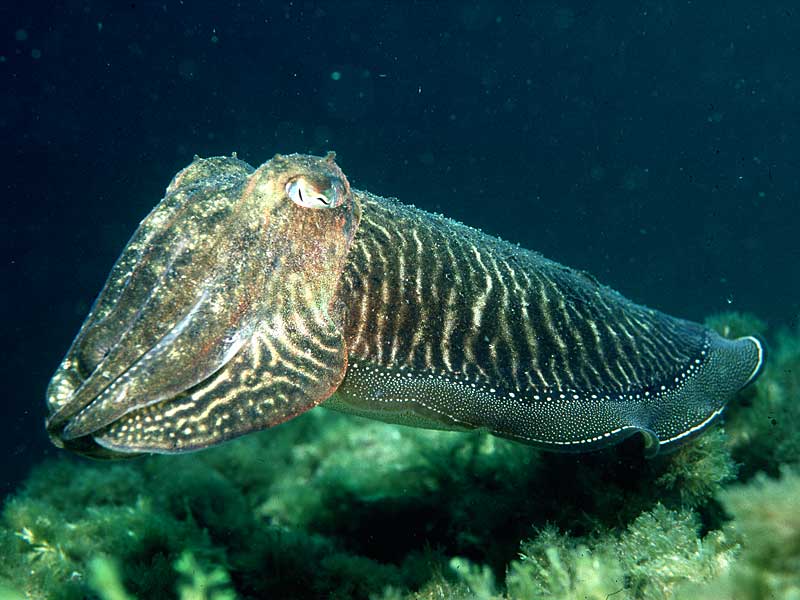
Description: This cuttlefish can reach up to around 30 cm in length with a characteristic broad, flattened body with 8 arms around the mouth. The body is fringed by a fin on each side and there are also 2 longer tentacles that can be used to capture prey. They often display a distinctive 'zebra-stripe' pattern when first spotted but have a range of different patterns which can be changed to either camouflage, communicate with others, or warn off predators and perceived threats. These animals are excellent at camouflaging themselves and often blend in extremely well with their habitat.
Habitat: Sand and mud down to 200 m, although rare in depths of over 100 m.
Distribution: Most records are from the south of Britain and Ireland, with scattered records elsewhere. It should be noted that cuttlefish bones are often recorded at the location they wash up; these can float for long distances and may skew true distribution of Sepia officinalis.
Similar Species: Unlikely to be confused with anything else. Could potentially be confused with bobtail squid, e.g. Sepiola atlantica or Rossia macrosoma.
Key Identification Features:
- Characteristic cuttlefish body plan.
- Often displays zebra-stripe pattern.
- 8 arms and 2 extendable tentacles.
Distribution Map from NBN: Sepia officinalis at National Biodiversity Network mapping facility, data for UK.
iNaturalist: Sepia officinalis at iNaturalist World Species Observations database.
GBIF data for Sepia officinalis
WoRMS: Sepia officinalis at World Register of Marine Species. Accepted name: Sepia officinalis Linnaeus, 1758. AphiaID: 141444.
Classification: Biota; Animalia; Mollusca; Cephalopoda; Coleoidea; Decapodiformes; Sepiida; Sepiina; Sepioidea; Sepiidae; Sepia
| Previous species | Next species |
| Picton, B.E., Keatley, L. & Morrow, C.C. (2025). Sepia officinalis. Linnaeus, 1758. [In] Encyclopedia of Marine Life of Britain and Ireland. https://www2.habitas.org.uk/marbiop-ni/speciesaccounts.php?item=W23930. Accessed on 2026-07-17 |