
| ANNELIDA : Amphinomida : Euphrosinidae | ANNELID WORMS |
Euphrosine foliosa Audouin & H Milne Edwards, 1833
 |
| Euphrosine foliosa |
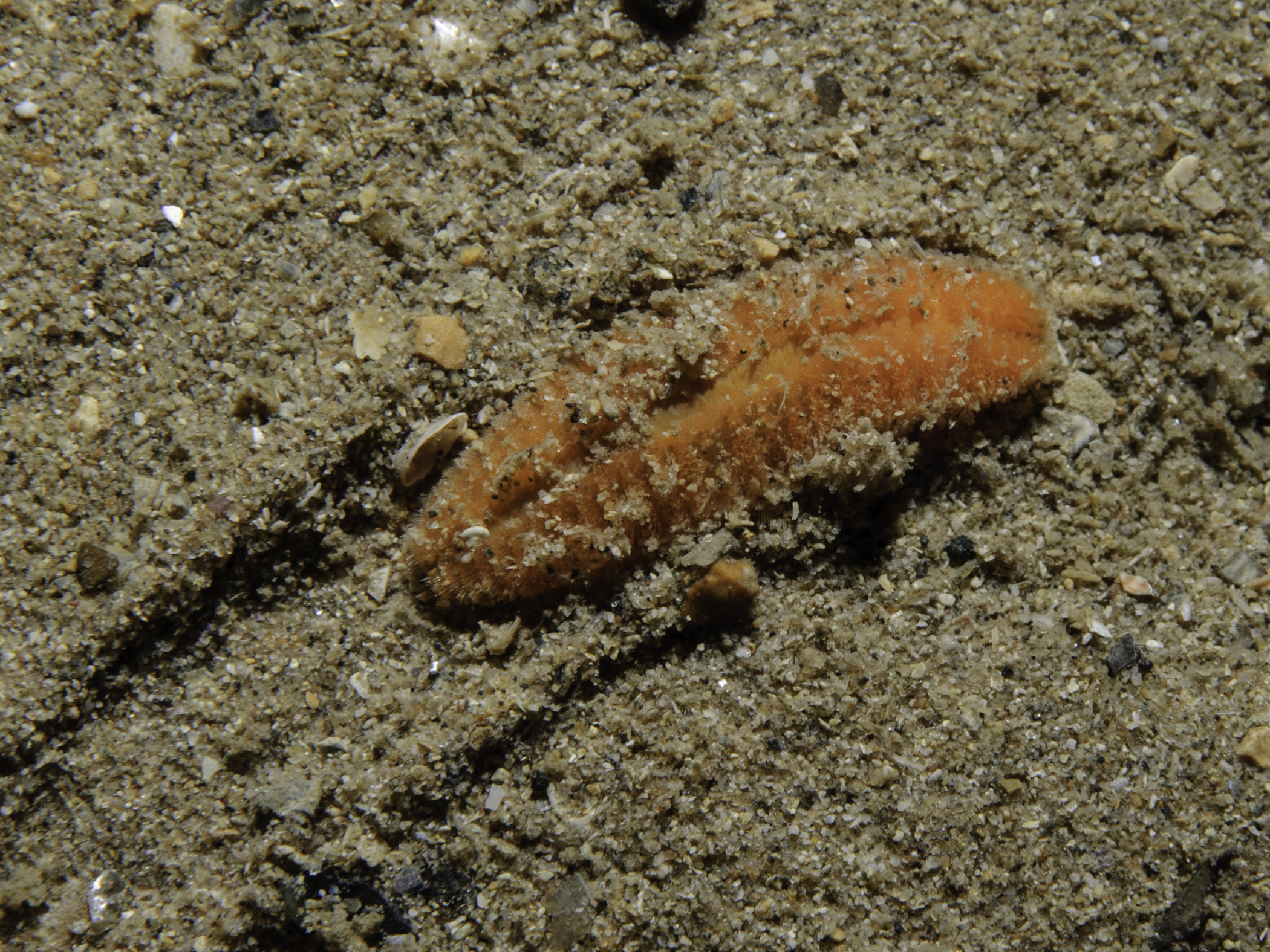
Description: This worm is a very striking colour either orange, brick-red or vermilion and is 10-30 mm long and up to 10 mm wide. There are two large eyes on the back of the head with a large antenna between them and two smaller eyes on the underside. There are 2 lateral antennae which are around half the size of the large central antenna. There are 30-36 chaetigers. The notopods cover part of the back of the animal on each side, leaving a small bare section along the centre. There are 7-9 pairs of dichotomously branching gills on each side of the animal, and the notochatae which are longer, form a row behind them.
Habitat: Under boulders or among shells and algae from low water to shallow subtidal.
Distribution: There are scattered records around Britain and Ireland, although it seems to be absent from the east coast of Britain.
Similar Species: Could potentially be confused with Spinther oniscoides as they are similar in appearance and colour, but it feeds on sponges and is usually found there.
Key Identification Features:
- Strikingly coloured worm – orange, brick-red or vermilion.
- 10-30 mm long, 10 mm wide.
- Two large eyes dorsally, with large median antenna between them.
- Notopods cover part of back, leaving small bare section down midline.
- 7-9 pairs of dichotomously branching gills on each side, with a row of notochaetae behind.
Distribution Map from NBN: Euphrosine foliosa at National Biodiversity Network mapping facility, data for UK.
iNaturalist: Euphrosine foliosa at iNaturalist World Species Observations database.
GBIF data for Euphrosine foliosa
WoRMS: Euphrosine foliosa at World Register of Marine Species. Accepted name: Euphrosine foliosa Audouin & H Milne Edwards, 1833. AphiaID: 130083.
Classification: Biota; Animalia; Annelida; Polychaeta; Errantia; Amphinomida; Euphrosinidae; Euphrosine
| Previous species | Next species |
| Picton, B.E., Keatley, L. & Morrow, C.C. (2025). Euphrosine foliosa. Audouin & H Milne Edwards, 1833. [In] Encyclopedia of Marine Life of Britain and Ireland. https://www2.habitas.org.uk/marbiop-ni/speciesaccounts.php?item=P9190. Accessed on 2026-09-21 |