
| ANNELIDA : Phyllodocida : Polynoidae | ANNELID WORMS |
Alentia gelatinosa (M. Sars, 1835)
Gelatinous scale worm
 |
| Alentia gelatinosa |
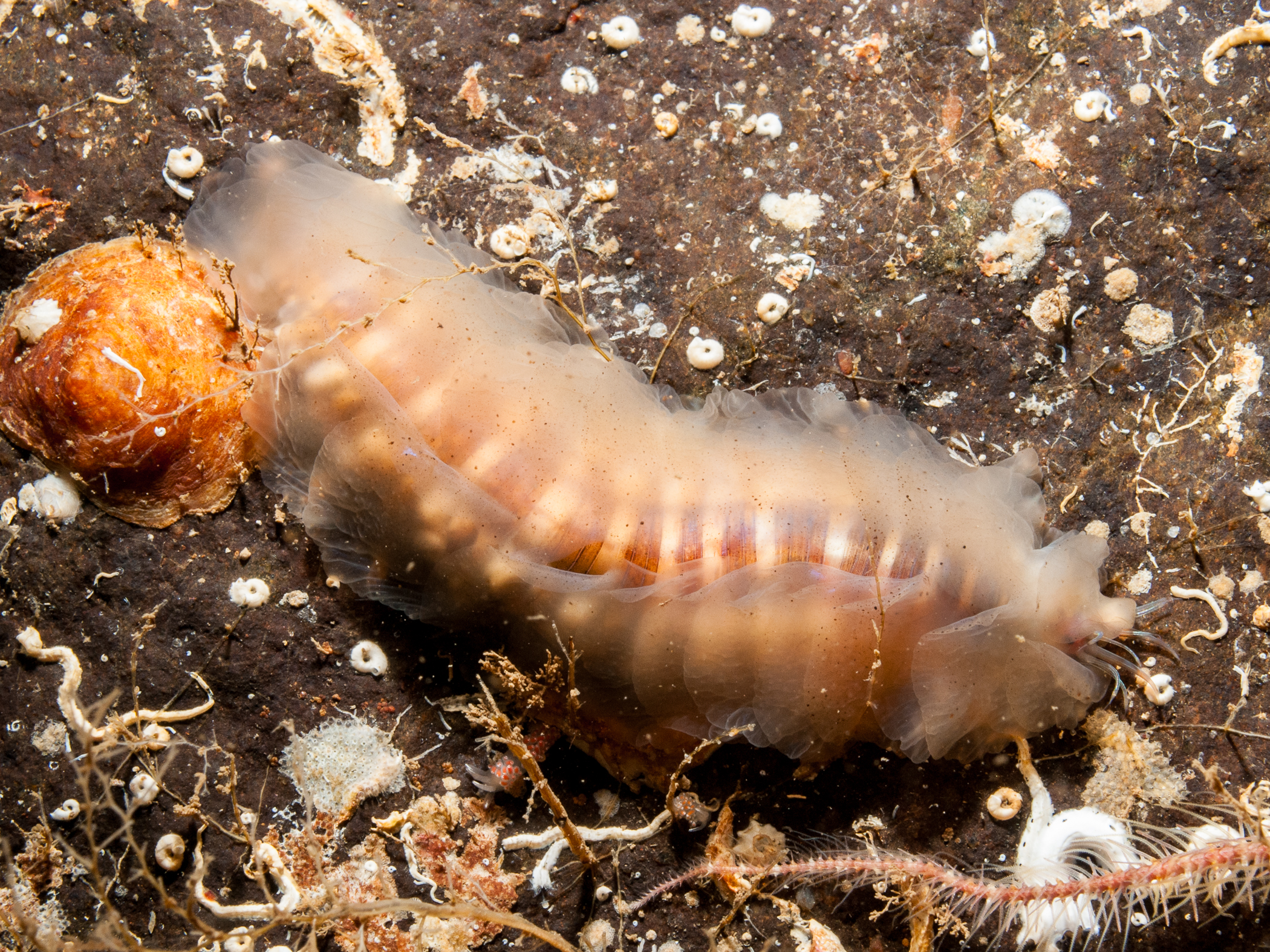
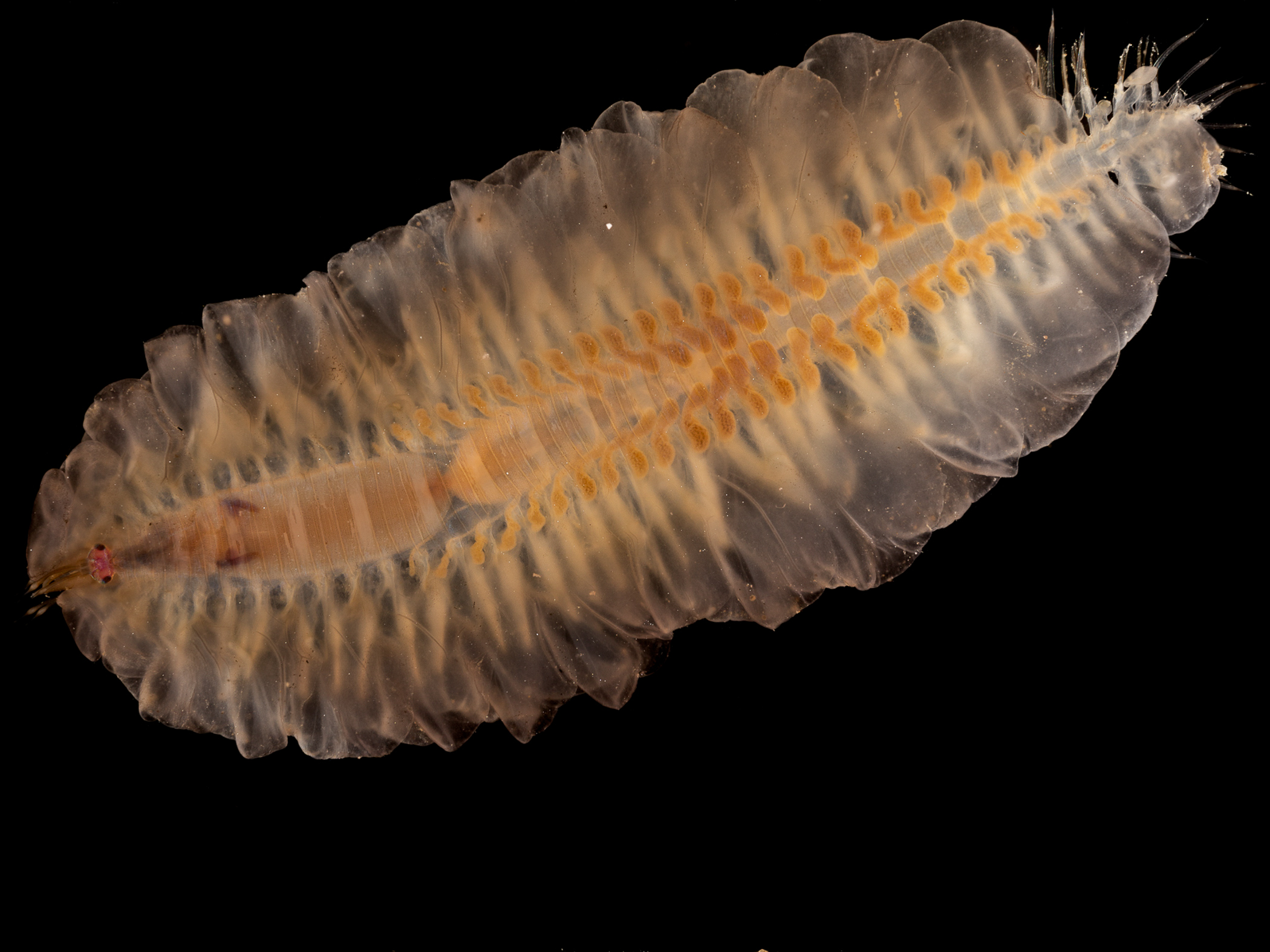
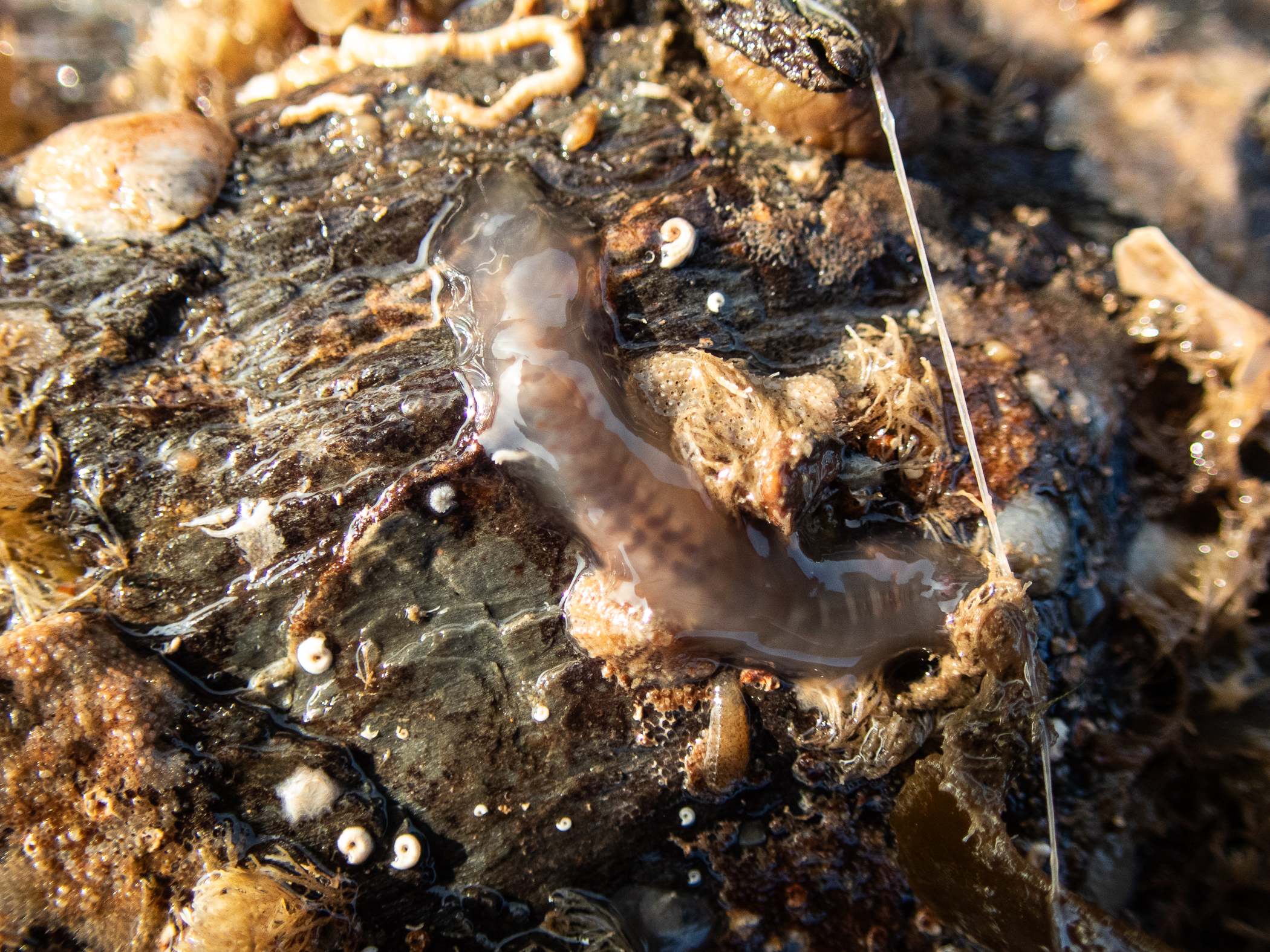
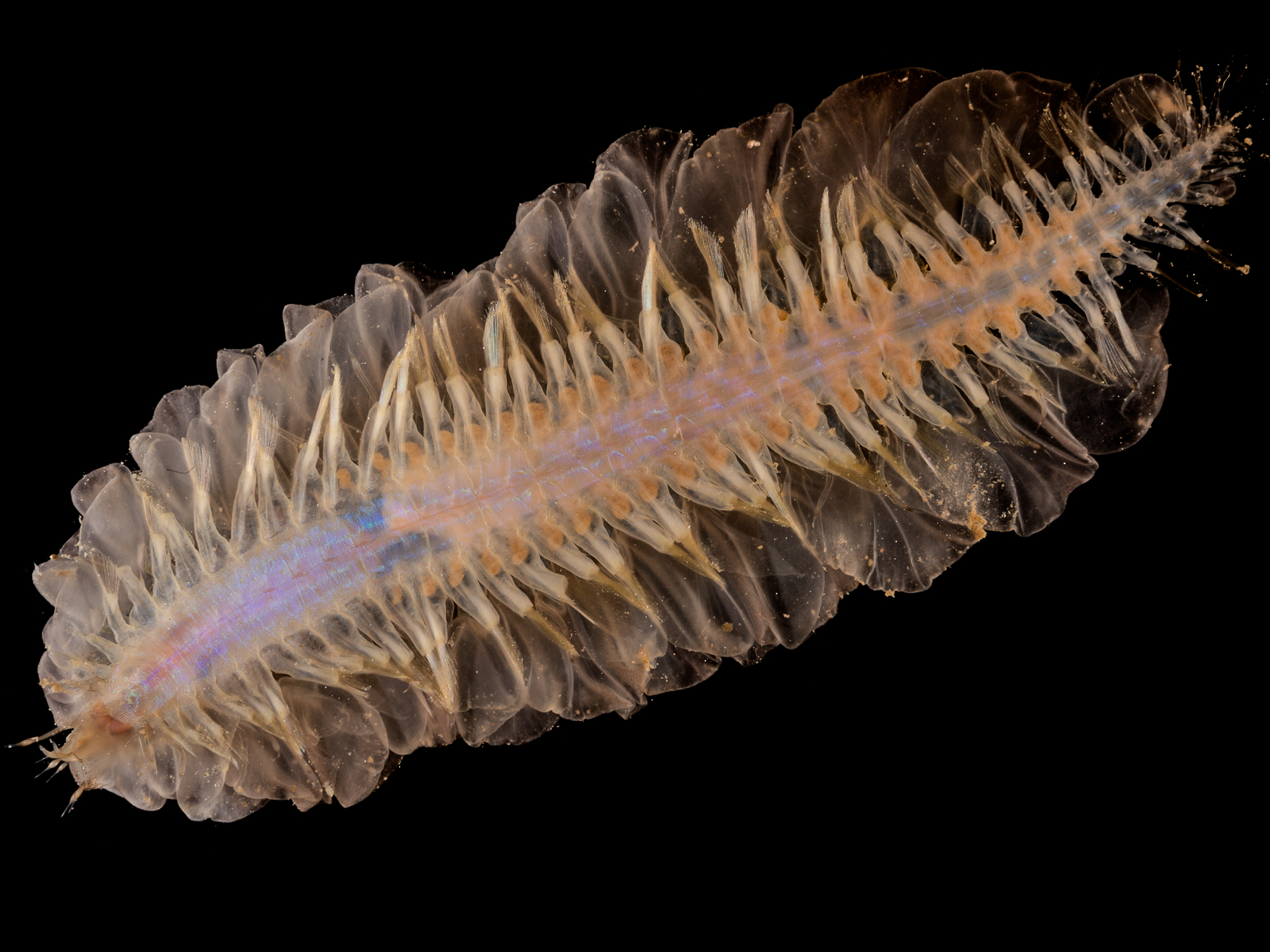
Description: This worm reaches 80-90 mm in length and has a straight-sided, flattened body which narrows at both ends. The dorsal surface is marked with brown and white bands, but covered by overlapping elytra (scales) which are a translucent dirty white to brown. There are 18 pairs of elytra which are large, soft, and may have reticulated brown patterning. They are covered with many small, brown papillae. This gives the worm an overall soft or gelatinous appearance. Prostomium (near head) is divided into two rounded lobes with large eyes on their outer side. Antennae are shorter than the palps, and tentacles are almost the same length. The ventral surface is orange in colour with some iridescence. It is very fast moving when disturbed.
Habitat: Under stones, usually on soft sediment. Shallow sublittoral or lower shore.
Distribution: Scattered records around most coasts of Britain and Ireland, although few records from SE coast of Britain.
Similar Species: Unlikely to be confused with any other species.
Key Identification Features:
- Dorsal surface banded brown and white but covered in translucent elytra.
- 18 pairs of elytra that are brown to dirty white, sometimes with reticulated pattern.
- Soft or gelatinous appearance.
- Ventral surface orange with some iridescence.
- Prostomium divided into two rounded lobes with eyespots on outer edge.
Distribution Map from NBN: Alentia gelatinosa at National Biodiversity Network mapping facility, data for UK.
iNaturalist: Alentia gelatinosa at iNaturalist World Species Observations database.
GBIF data for Alentia gelatinosa
WoRMS: Alentia gelatinosa at World Register of Marine Species. Accepted name: Alentia gelatinosa (M. Sars, 1835). AphiaID: 130722.
Classification: Biota; Animalia; Annelida; Polychaeta; Errantia; Phyllodocida; Aphroditiformia; Polynoidae; Lepidonotinae; Alentia
| Previous species | Next species |
| Picton, B.E., Keatley, L. & Morrow, C.C. (2025). Alentia gelatinosa. (M. Sars, 1835). [In] Encyclopedia of Marine Life of Britain and Ireland. https://www2.habitas.org.uk/marbiop-ni/speciesaccounts.php?item=P600. Accessed on 2026-09-15 |